

Introduction
Few archaeological finds have captured the public imagination quite like the discovery of Tutankhamun's tomb, and at the center of that fascination sits the Gold Mask of Tutankhamun, a nearly 11-kilogram solid gold funerary mask that has come to represent ancient Egypt itself in the eyes of much of the world
Table of content:
- Why Are Tutankhamun's Golden Treasures So Famous?
- What Makes the Gold Mask of Tutankhamun So Extraordinary?
- What Treasures Were Found in Tutankhamun's Tomb?
- What Do the Treasures of Tutankhamun Reveal About Ancient Egypt?
- Where Can You See Tutankhamun's Treasures in Egypt?
- How Can You Include King Tutankhamun in Your Egypt Trip?
- FAQs
Why Are Tutankhamun's Golden Treasures So Famous?
Few archaeological discoveries have fascinated the public as much as Tutankhamun's tomb, and few of its finds have fascinated as many people as the gold mask of Tutankhamun, the nearly 11-kg solid gold relic that has become a symbol of ancient Egypt in the minds of many. This mask represents just one part of an even more significant find — the 5,000+ items that were recovered from the tomb, mostly undisturbed since they were buried there, providing historians with an almost complete picture of royal funerary customs that no other tomb in the country has preserved. For those who want to see these artifacts and others in person, Egypt Travel Packages show how such a journey organized around a visit to the king's tomb usually works.
Who Was King Tutankhamun?
Tutankhamun was Egypt's pharaoh during the reign of the 18th Dynasty, ruling as a toddler from approximately 1332 BC until his death about nine years later. Because he ruled shortly and weakly, his rule left little impact on history. Moreover, his adulthood was also short — most scholars believe he died in his late teens from natural causes or an accident.
How Was the Pharaoh's Tomb Discovered?
The British archaeologist Howard Carter discovered the pharaoh's tomb in the Valley of the Kings in November 1922, having invested money in the search for several years under the patronage of Lord Carnarvon. Unlike many other royal tombs, which have been plundered centuries earlier, Tut's tomb was largely intact when Carter and his team opened it. It took them about ten years to catalog and remove the 5,000+ items found in the tomb.
What Makes the Gold Mask of Tutankhamun So Extraordinary?
Aside from being made of valuable materials, the mask is unique in its artistry and meaning compared to other burial masks of that time.
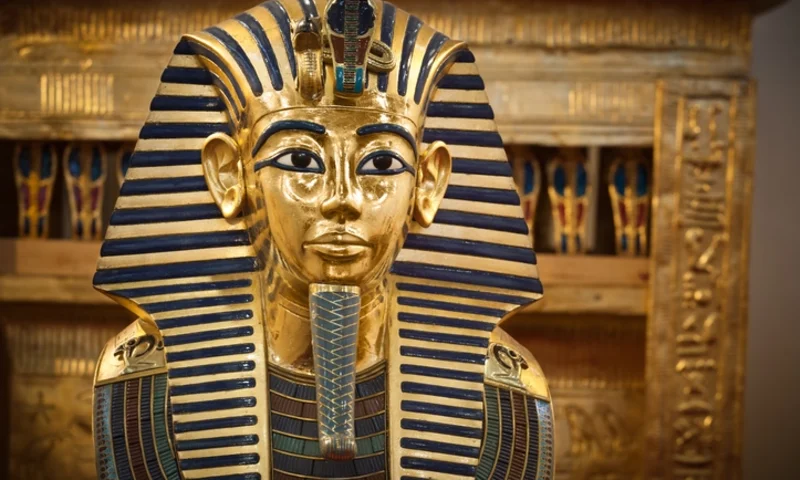
What does Tutankhamun's mask look like?
The mask represents the young king's face made of gold plates inlaid with lapis lazuli, carnelian, turquoise, and glass. It was placed over the pharaoh's head to protect his mummy and help his soul recognize his body.
What meaning do the symbols on the mask have?
The mask was decorated with a nemes headdress made of alternating gold and blue stripes, and a vulture and cobra on the forehead, representing Upper and Lower Egypt. A false beard was also attached to the chin, which was another attribute of the ancient Egyptian pharaohs, and several masks from that period also had similar features.
What Treasures Were Found in Tutankhamun's Tomb?
The mask is part of the burial assemblage that filled four chambers with various artifacts, from monumental coffins to the smallest personal accessories.
Tutankhamun’s Golden Coffin
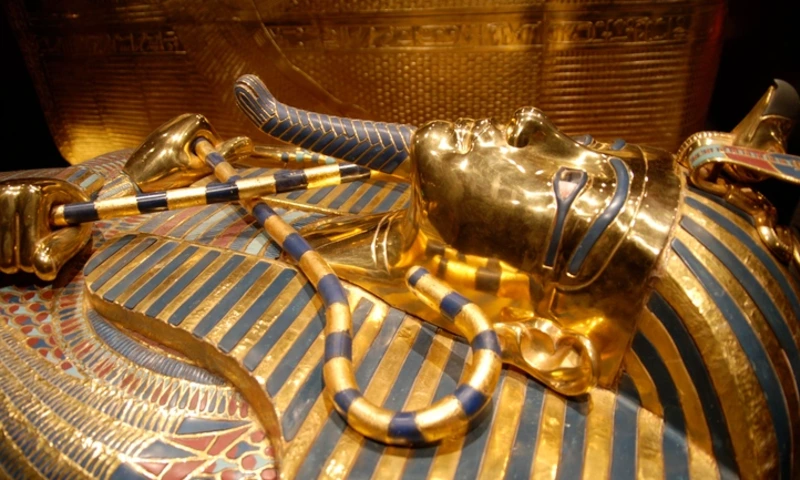
The first of the three nested coffins in which the king was placed was made of solid gold, weighing over 110 kg, and directly encased the mummified body of the ruler, while the mask adorned the innermost coffin. However, the two other coffins were wooden, covered with gold, and were placed as the second and the third ones, each representing the gradually growing size of the Pharaoh, an idealized image enclosed within a series of ornamental boxes.
Royal Jewelry and Personal Treasures
Numerous jewelry items, including pectorals, rings, bracelets, and amulets, were discovered among the burial finds, partially decorated with ancient hieroglyphics or carved from semi-precious minerals, and scarabs, associated with specific protections, were presented. Other personal treasures included footwear, board games, and chests of garments, depicting the unique lifestyle of the ancient ruler and presenting an intimate insight into the daily routine of the young king.
The Golden Throne and Ceremonial Objects
The gilded wooden throne, carved with the scene of the young king and his wife, was among the most distinctive artifacts of Tutankhamen’s treasure, decorated in detail. Besides jewelry and personal items, the tomb contained numerous ceremonial objects, such as chariots and weapons, and stood for the variety of the burial equipment needed to fulfill the Pharaoh’s journey in the afterworld.
What Do the Treasures of Tutankhamun Reveal About Ancient Egypt?
As well as being remarkable achievements, these objects are a rare and largely undisturbed insight into royal life and belief during the New Kingdom.
Royal Life and the Young Pharaoh
The vast array of personal belongings included in the tomb from board games to clothing provides historians with an insight into palace life that was not available elsewhere, as monumental temple inscriptions are lacking. However, Tutankhamun was still very young when he died, and there is also the lingering mystery as to how such an extravagant burial could have been afforded by a king who only reigned for a short period of time.
Ancient Egyptian Beliefs About the Afterlife
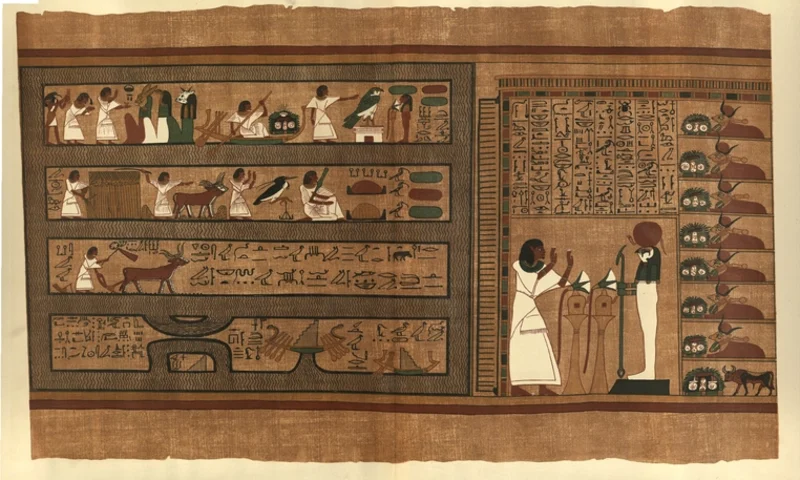
The importance placed on protection and symbolism within the tomb, as well as the wealth of treasures included, gives great insight into the Egyptian's religious beliefs regarding the afterlife, which permeated every aspect of daily life. Every single object, including the inlays on the mask and the coffins themselves, were included in order to protect and guide the Pharaoh on his journey into the afterlife.
Where Can You See Tutankhamun's Treasures in Egypt?
Most of the collection recovered from the tomb find is now on display together for visitors eager to view it firsthand.
Tutankhamen's Collection & the Grand Egyptian Museum
The entire Tutankhamun collection, including the golden mask, coffins, and thousands of associated objects, is now displayed together at the GEM Grand Egyptian Museum near Giza for the first time since its excavation in 1922. The museum's size allows displaying the collection with the context and spacing that earlier, more compact arrangements couldn't allow.
Touring the Valley of the Kings in Luxor
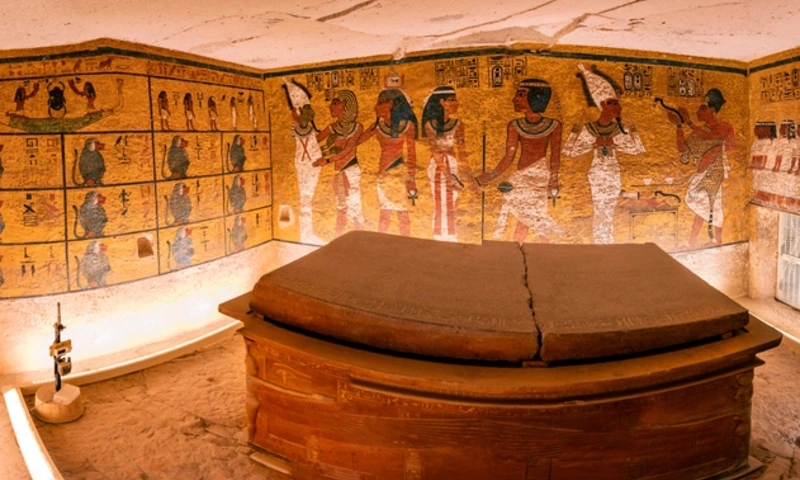
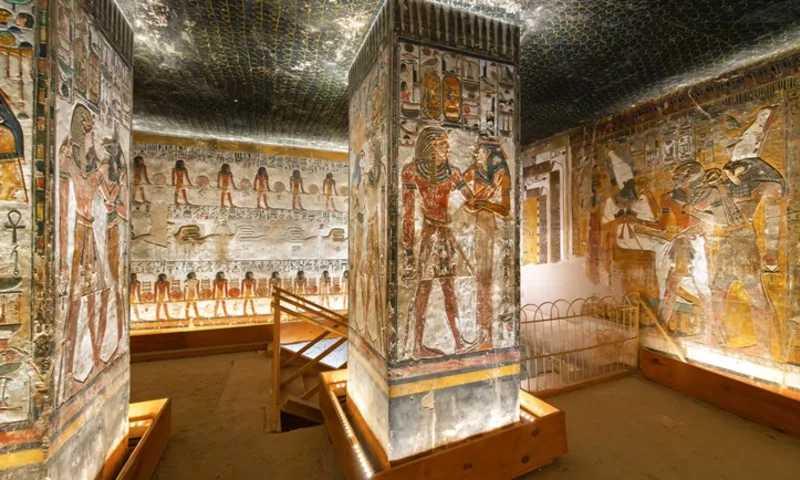
The actual tomb complex, designated KV62, still stands in the Valley of the Kings in Luxor and is accessible to the public, though it's much smaller and simpler than many of its royal neighbors since it wasn't intended for a reigning king. Standing inside provides an altogether different perspective on the find than gazing over the objects in an exhibition hall. Check our guide to Egyptian Museums to learn how this relates to other museums in the greater Cairo area for those considering visiting both.
How Can You Include King Tutankhamun in Your Egypt Trip?
A tour based on the history of Tutankhamun inevitably combines the cities of Cairo and Luxor, offering a day tour of the Grand Egyptian Museum and an opportunity to explore the Valley of the Kings. Our Egypt Tour with Nile Cruise perfectly connects these two destinations, as well as the whole journey along the Nile River within the framework of one tour. If you are looking for an extended option to familiarize yourself with not only Luxor but also with Cairo and the surrounding areas, we suggest considering the Cairo and Nile Cruise Package. To get a general understanding of how to plan a trip to Egypt and what sights to visit, we recommend that you study our Egypt Travel Guide covering all popular areas.
FAQs
1- Where is the Gold Mask of Tutankhamen now?
The mask is part of a new exhibit at the Grand Egyptian Museum near Giza, where it is on display with the entire treasure of King Tut.
2- Who discovered the tomb of Tutankhamun?
It was an English Egyptologist named Howard Carter who discovered the tomb in November 1922 in the Valley of the Kings – and it was almost intact compared to most of the other tombs in the Valley.
3- What does the mask of Tutankhamen actually consist of?
The mask is made of solid gold and inlaid with lapis lazuli, carnelian, turquoise, and colored glass that weigh nearly 11 pounds.
4- How many objects were found in the tomb of Tutankhamun?
More than 5,000 different objects were found in the tomb – some of which are absolutely fascinating – from giant gold funerary masks to everyday use sandal, jewelry, board games, and more.
5- Is it possible to see the tomb of Tutankhamun in Egypt?
Today, the tomb – officially designated as KV62 – is open for business in the Valley of the Kings in Luxor – although it is smaller and less elaborately decorated than many of its neighboring tombs.