Menu
All blogs

Egyptian Blog

Things to Do in Alexandria Egypt: Attractions & Travel Guide

Introduction

There is no other city in Egypt with a character like that of Alexandria. The city was founded on the Mediterranean coast in 331 BC by Alexander the Great and later became one of the major centres of trade and learning in the ancient world. In today's day and age, the best activities to do in Alexandria, Egypt link its long history with that of a modern coastal city since its archaeological sites, museums, waterfront landmarks and busy streets are amazingly close to one another.

 Alexandria is a good choice for people visiting it for the first time whether they intend to stay there or just take a trip from Cairo; the main attractions span several periods of Egyptian history, especially the Greek and Roman times, and the Corniche together with its location by the Mediterranean Sea gives a totally different character compared to Cairo, Luxor, and the Nile Valley.

What Are the Main Alexandria Egypt Attractions?

The various attractions in Alexandria, in Egypt, show the city's location at the junction of Egypt and the Mediterranean world and, unlike other places, visitors can see underground tombs from the Roman era, a medieval fortress and modern cultural organisations all within one day.
Key places to consider include:
 
  • Qaitbay Citadel
  • Catacombs of Kom El Shoqafa
  • Pompey's Pillar and the Serapeum
  • Bibliotheca Alexandrina
  • Graeco-Roman Museum
  • Alexandria National Museum
  • Kom El Dikka and the Roman Theatre
  • Montaza area
  • Alexandria Corniche
For travelers who are interested in archaeology and museums, Alexandria offers a particularly worthwhile range of attractions, but the city is not just concerned with its monuments. The time spent along the Mediterranean waterfront helps to give its history a geographical context.
Qaitbay Citadel
 
The Qaitbay Citadel is located on the Mediterranean coast at the eastern harbour of Alexandria and was ordered to be built by Sultan Al-Ashraf Qaitbay in the 15th century on the spot which has traditionally been linked with the ancient Lighthouse of Alexandria.
 
The fact that it is situated on the coast is an important element of the tour. When people walk around the fortress they get a better understanding of Alexandria's connection with the Mediterranean and of the strategic value of its harbour.
 
When people are looking for places to visit in Alexandria, Egypt, the citadel is a natural choice since it brings together architecture, history, and the city's position by the sea.
 

Catacombs of Kom El Shoqafa

 
The Catacombs of Kom El Shoqafa are one of Alexandria's most notable archaeological sites. Dating from the Roman period, this underground funerary complex features architecture and decoration that blend Egyptian, Greek, and Roman traditions.
 
To get down below ground, visitors have to go through the complex, and in doing so they experience something quite different from the open-air temple sites in Egypt since the combination of artistic traditions shows the multicultural nature of ancient Alexandria.
 

Pompey's Pillar and the Serapeum

 
The Pompey Pillar is located in the archaeological zone connected with the ancient Serapeum; although it has the well-known name of Pompey, the column was actually built as a tribute to the Roman emperor Diocletian.
 
One of the most recognizable of Alexandria's ancient monuments is the surviving column, and by visiting the archaeological site in the area you can better understand its place within the broader context of the city's Roman history rather than seeing the column as a separate and isolated feature.
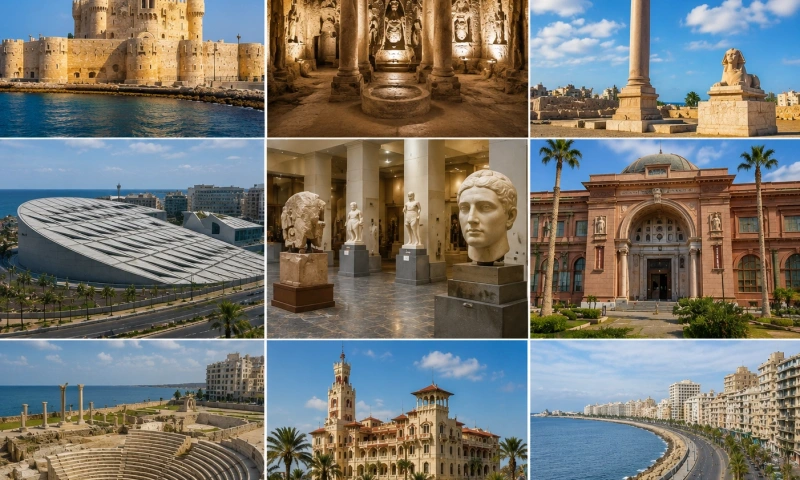
Alexandria Through Nine Timeless Views, Things to Do in Alexandria Egypt
Alexandria Through Nine Timeless Views

Museums and Archaeological Sites in Alexandria

The monuments that have survived in Alexandria reveal only part of the city's history, since several museums offer the historical background necessary for understanding its development through the ancient Egyptian,
 
Greek, Roman, Coptic, Islamic, and other later periods.
For anyone who is particularly interested in the historical sites of Alexandria in Egypt, mixing visits to museums with trips to the archaeological sites results in a more coherent experience.
 

Graeco-Roman Museum

 
The museum at Alexandria is devoted to the various periods that occurred after the city was founded by Alexander the Great, and its collections illustrate how Egyptian, Greek, and Roman traditions interacted over the centuries of political and cultural change.
 
The museum is helpful when people visit Kom El Shoqafa, Kom El Dikka, and the other archaeological sites in the city; it enables the physical remains found elsewhere in Alexandria to be better understood by placing the objects in their historical context.
 

Alexandria National Museum

 
The Alexandria National Museum shows objects from various periods of Egyptian history, thus giving visitors a more comprehensive chronological view of the city and the surrounding country.
 
For people who are visiting a museum for the first time and have only a short amount of time, going to the museum either before or together with visits to archaeological sites can be very helpful since it gives context for the various civilizations found in Alexandria.
 

Kom El Dikka and the Roman Theatre

 
The site of Kom El Dikka contains among its remains important structures such as the one usually referred to as the Roman Theatre or Roman Amphitheatre.
 
The archaeological site also gives an insight into everyday and civic life in the ancient city and suits well with a tour that focuses on Alexandria's Greek and Roman history.
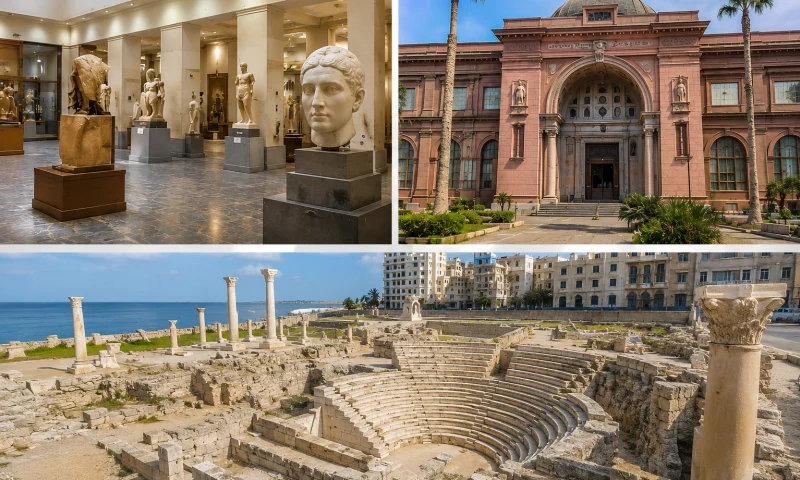
Three Theaters in Alexandria, Things to Do in Alexandria Egypt
Three Theaters in Alexandria

Bibliotheca Alexandrina and the Mediterranean Waterfront

The modern city of Alexandria still derives a great deal of its character from the Mediterranean, and one way of seeing this is to spend some time at the Bibliotheca Alexandrina while another is to walk along part of the Corniche by the sea.
 

Bibliotheca Alexandrina

 
The Bibliotheca Alexandrina is a modern cultural and research institution which has been set up in connection with the ancient Library of Alexandria, and its unique modern architecture causes it to stand out from the other archaeological sites in the city.
 
The complex symbolises Alexandria's ongoing connection with scholarship and knowledge rather than aiming to recreate the ancient library; those who are interested in the city's intellectual history can consider it together with the museums and the archaeological sites in order to get a more comprehensive understanding of Alexandria's past and present.
 

Alexandria Corniche

 
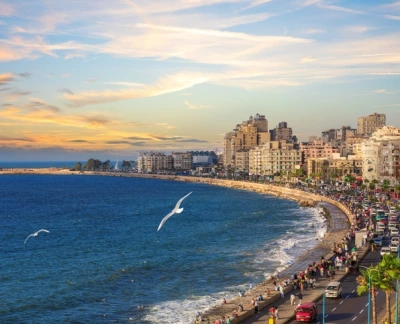
The Corniche lies along the Mediterranean coast of Alexandria and links various parts of the city. Instead of acting as a single tourist attraction, it is part of Alexandria's everyday geography.
 
Going along the waterfront shows just how closely the modern city is linked to the sea; it also provides a natural transition between cultural sightseeing and the time people spend just looking at Alexandria as a living Mediterranean city.
 

Montaza

 
The Montaza area is situated on the eastern side of Alexandria and is linked with the Montaza palace complex and its gardens; it offers a setting different from that of the archaeological centre of the city and may therefore be included in a wider Alexandria itinerary if one has the time.
 
When people are planning to visit several places in Alexandria, Egypt, they should take geography into account when organising their day, as the attractions are located in different parts of the city and not all situated in one small historical area.
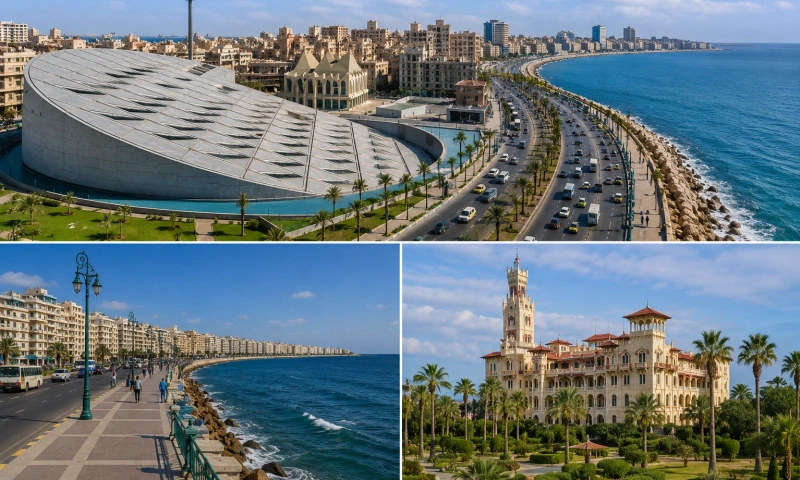
Alexandria Coastal City Collage

How to Plan the Best Things to Do in Alexandria Egypt

An Alexandria itinerary that is practical should group together the various attractions; the archaeological sites such as Kom El Shoqafa, Pompey's Pillar, and Kom El Dikka can make up the historical heart of the city, while the
Qaitbay Citadel and the Corniche show its Mediterranean features.
 
Instead of just being another attraction, museums offer some useful context; people who are especially interested in classical history might want to spend more time at the Graeco-Roman Museum, while the Alexandria National Museum gives a broader chronological survey.

Alexandria can also be incorporated into a wider Egypt itinerary. Travelers continuing through the country can compare Egypt Tour Packages with individual excursions, while those heading south can use an Egypt Nile Cruises tours to understand how Alexandria can fit alongside Cairo, Luxor, and Upper Egypt.

Visiting Alexandria from Cairo

Alexandria is commonly included in Egypt itineraries as an excursion from Cairo. Travelers considering this option should choose which attractions matter most rather than attempting to cover every museum, archaeological site, and coastal district in one visit.

A focused day can prioritize major historical sites and one or two waterfront landmarks. A longer stay allows more time for museums and areas outside the central sightseeing route.


Practical Alexandria Travel Tips

Plan the order of your sightseeing according to location and the sites you most want to see. Alexandria stretches along the Mediterranean coast, so grouping nearby attractions reduces unnecessary travel between different parts of the city.

Opening arrangements, admission conditions, and visitor access can change. Check current information for individual museums and archaeological sites before visiting, particularly when building an independent itinerary.

Travelers interested mainly in history should prioritize the archaeological sites and museums. Those with more time can balance these visits with the Corniche, Mediterranean districts, and other parts of modern Alexandria.

FAQs

1- What are the best things to do in Alexandria Egypt?

The main things to do in Alexandria Egypt include Qaitbay Citadel, the Catacombs of Kom El Shoqafa, Pompey's Pillar, Kom El Dikka, Bibliotheca Alexandrina, and the city's museums. The Mediterranean Corniche adds a coastal dimension to a history-focused itinerary.

2- What are the main Alexandria Egypt attractions for first-time visitors?

Major Alexandria Egypt attractions include Qaitbay Citadel, Kom El Shoqafa, the Graeco-Roman Museum, Bibliotheca Alexandrina, Pompey's Pillar, and Kom El Dikka. The best selection depends on how much time you have and whether your priority is archaeology, museums, or the waterfront.

3- Is Alexandria worth visiting for history?

Yes. Alexandria has archaeological remains and museum collections connected with several periods, with particularly strong Greek and Roman associations. Sites such as Kom El Shoqafa and Kom El Dikka can be combined with the Graeco-Roman Museum for greater historical context.

4- Can Alexandria be visited on a day trip from Cairo?

Alexandria can be included as a day excursion from Cairo. With one day, it is more practical to select a focused group of major attractions rather than trying to cover every museum, archaeological site, and coastal area.

5- What historical sites should I see in Alexandria?

Qaitbay Citadel, the Catacombs of Kom El Shoqafa, Pompey's Pillar and the Serapeum, and Kom El Dikka are important historical places to consider. Museums can then provide additional context for Alexandria's long and layered history.

Plan Your Alexandria Visit

Use this guide to choose the things to do in Alexandria Egypt that best match your interests with Egypt Tour Packages to build Alexandria naturally into your Egypt itinerary.


Contact our Egypt Travel Experts

Reach out to us to get all your questions about Egypt tours answered!

Write a Message

Travel expert assisting a customer
Trans Travel
Welcome to Trans Travel

Sign in or create an account to book this trip

No account?

Enter your account email and we'll send you a link to reset your password.

Remembered your password?

A verification code was sent to

Wrong email?

One more step — add your phone number to finish creating your account for

Already have an account?