

Introduction
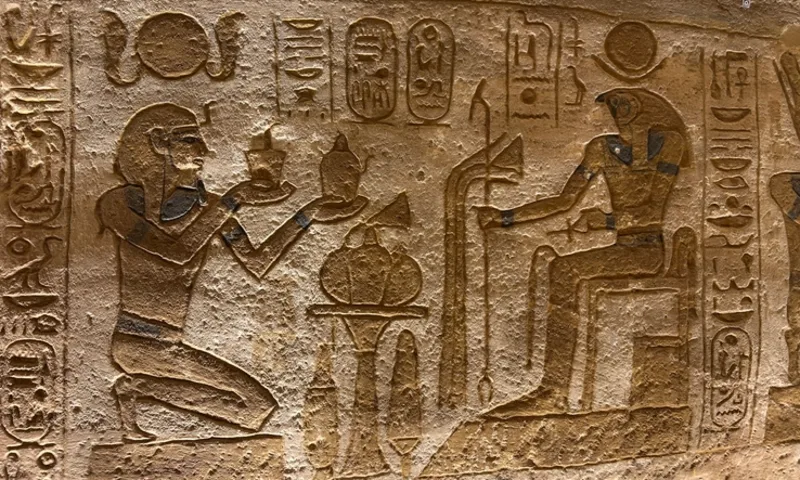
Religion touched almost every part of ancient Egyptian life, from the farming year to the crowning of a king. People honored hundreds of Egyptian deities, each with a personality, a set of powers, and a home town where their cult was strong. Some were creators and rulers, others guarded homes, travelers, or the dead. Learning about Egyptian gods and goddesses is easier once you see how their roles fit together, and a temple makes those roles visible: the carvings are still there, with each god shown in the pose and crown that identified them.
Table of content:
- Egyptian Gods and Goddesses: Names, Powers and Meanings
- Who Were the Most Important Egyptian Gods and Goddesses?
- What Powers and Symbols Did Egyptian Deities Have?
- How Were Egyptian Gods and Goddesses Connected?
- How Did Egyptian Gods and Goddesses Shape Beliefs About Life and Death?
- Where Can Travelers Discover Egyptian Gods and Goddesses Today?
- FAQs
Egyptian Gods and Goddesses: Names, Powers and Meanings
Religion played an active part in everyday life in Ancient Egypt, from the agricultural cycle to the coronation of a new pharaoh. The ancient Egyptians believed in hundreds of gods and goddesses, each of whom had characteristic features, supernatural powers, and a cult that was centered around a particular town. Some of the gods are creators and law-givers, while others are protectors of travelers, the deceased, and the home. Reading this article will help you learn the history of the ancient Egyptian gods and goddesses and understand the context of their worship. The article also includes information about open-air temples where gods’ statues stood and where you can still see the carvings on the walls representing different deities with their specific attributes and headdresses. Get to know the most famous gods and goddesses of Ancient Egypt in this article and then book our Egypt Travel Packages to experience the history of this great civilization by visiting the places of religious significance.
To get a better understanding of the ancient Egyptian beliefs, you may want to see the actual artifacts and investigate the open-air temples in Egypt. Our Egypt Travel Package presents an opportunity to see the ancient history through the facades of stone gods, observe carvings on the walls, and explore the mysteries of the religion that has once governed every corner of life in Ancient Egypt.
Who Were the Most Important Egyptian Gods and Goddesses?
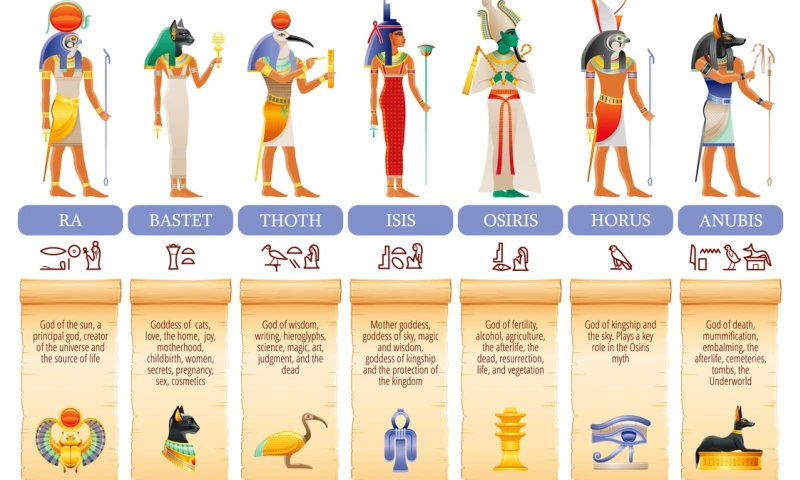
Importance varied across different time periods and civilizations, and the gods’ popularity went up and down. Nevertheless, there are some deities that are frequently mentioned in temples and tombs, and it is essential to learn their names and attributes first.
Who Were Ra, Amun and Osiris in Ancient Egyptian Religion?
The most important god, whose cult was based in Heliopolis, was the sun god Ra. He was said to sail the sky in a solar boat every day and go back through the underworld to the eastern horizon at night. This is how the ancient Egyptians explained the sunrise and the change of the seasons. In Thebes, the local god Amun became popular, and later the two gods combined into one: Amun-Ra, the king of the gods. Karnak temple is decorated with the statues of pharaohs that ruled Thebes and expanded the city’s territory. Osiris was the god of death and rebirth, associated with the underworld, resuscitation, and fertility. The ancient Egyptians believed that Osiris’s realm was a goal to strive for, and he was a role model for everyone.
What Powers Did Isis, Hathor and Bastet Represent?
The goddess Isis was the wife and sister of Osiris, and she was beloved by the ancient Egyptians. They believed she possessed the powers of protection and magic and was a caring mother. Horus was the son of Isis and Osiris, and his animal form was a falcon or a man with a falcon’s head. The goddess Hathor was associated with love, music, and joy and was often depicted with cow’s ears, horns, and a sun disk on her head. The goddess Bastet was the protector of the people and houses and was linked with cats and the cat goddess. Her cult center was in the city of Bubastis.
Why Were Horus, Anubis and Thoth So Important?
The most important aspect of Horus was the sun, which he represented. His animal-headed appearance was probably a prototype for the sacred falcons in ancient Egypt. Horus was the god of kings, and his body was revered as sacred, as every new pharaoh had to claim him as his ‘son.’ Anubis was the god of embalming and the underworld, and he was responsible for watching over the tombs, guiding the souls through the underworld, and protecting the bodies of the deceased. The ibis-headed god Thoth was the scribe of the gods and served the sun god Ra. He was responsible for writing down the correct verdicts for the gods and the dead, judges in the afterlife.
What Powers and Symbols Did Egyptian Deities Have?
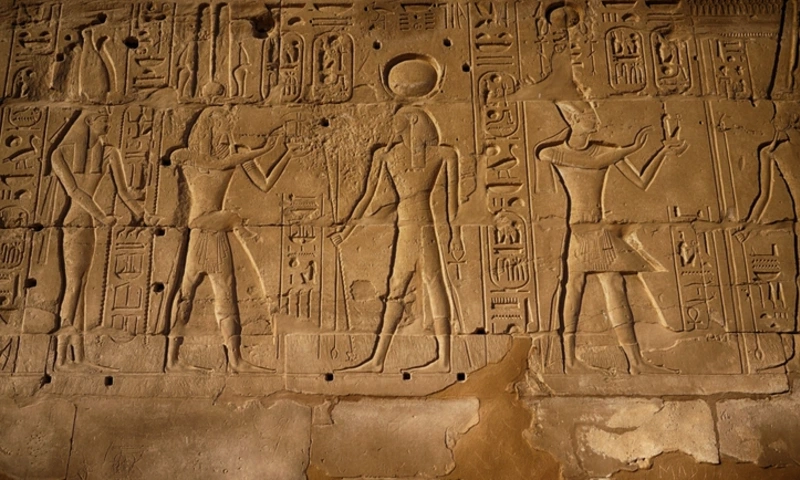
Every Egyptian Deities had a sphere of influence, and artistic representations included characteristic attributes to help the worshipper recognize the deity. A few of these signs are essential for deciphering Egyptian gods and goddesses on a temple wall.
Why Did Egyptian Deities Have Animal Heads?
Animal features could be used to good effect, providing the god with perceptive powers like the eyes of a falcon or familiarity with cemeteries like a jackal. In most cases, the attributes were taken to represent the characteristic of the god or goddess but not necessarily literal aspects, which is why they might appear in human, beast, or a mixture of forms.
What Did the Sun Disk, Ankh and Eye of Horus Symbolize?
The sun disk represents Ra and embodies the sun’s life-giving power; it surmounts the heads of various gods. The ancient Egyptians believed the ankh symbolized life; it is frequently seen in the hands of gods, who offer it to the king. The Eye of Horus was a potent symbol of protection, healing, and wholeness, and it was one of the most popular amulets in ancient Egypt. Egyptian hieroglyphs sometimes use visual clues to indicate meaning, but the significance of the attributes can change and must always be taken in context. Thus, the difference in connotations can be seen in the use of the same signs in tombs and temples throughout ancient Egypt.
How Did Ancient Egyptians Recognize Different Gods?
The headdresses and crowns are the simplest way to identify most gods and goddesses in Egyptian mythology. For instance, Isis always wears her throne headdress, while Hathor’s attributes are the two horns and sun disk on either side of her head. Other signs, such as the figures of animals associated with the deity, emblems, scepters, and name written in hieroglyphs also help to distinguish one god or goddess from another. The religious beliefs of ordinary ancient Egyptians permeated every aspect of their lives. Our guide to life in Ancient Egypt provides more information on how the gods featured in everyday affairs.
Many of Egypt’s most beautiful temples are located near the Nile and our Egypt Nile Cruises can take you to see some of them, where you can view the fascinating reliefs of gods and goddesses.
How Were Egyptian Gods and Goddesses Connected?
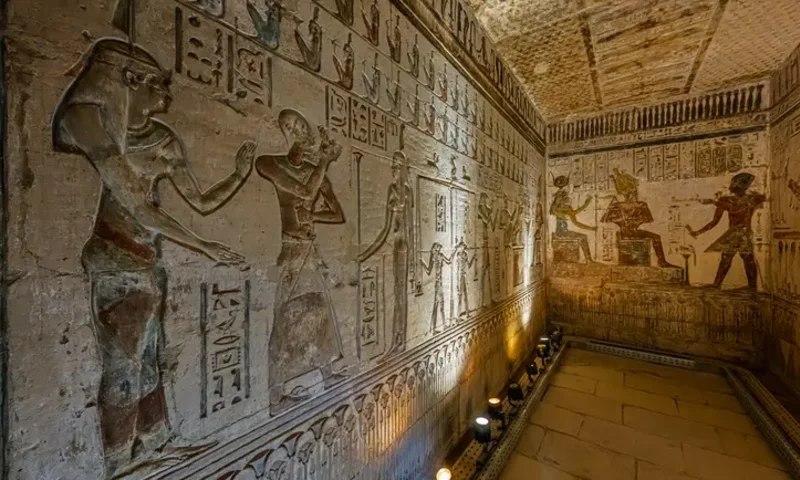
Egyptian deities seldom act as individuals, and their family relationships, partnerships, and even rivalries can enrich the art and rituals that glorify them.
How Were Osiris, Isis, Horus and Set Related?
Osiris’s wife Isis bore him a son, Horus, and Set was his half-brother and later the rival claiming the throne. Osiris was the god of fertility, and Isis was the goddess of magic, and Nephthys was the helper in rituals, and she had another son with Osiris. Ancient Greeks described the whole story and the conflict between Horus and Set, which was necessary to determine the legitimate ruler of Egypt.
What Were the Famous Divine Families of Ancient Egypt?
The ancient Egyptians often worshiped a set of gods in a temple, and it was usually a family of gods. For example, in Karnak, the locals worshiped the Theban triad – Amun, his wife Mut, and their son Khonsu. There is also the Osirian family of gods – Osiris, Isis, and Horus. These triads were probably formed to give a sense of locality, and every city had its gods and goddesses.
Why Did Different Egyptian Cities Worship Different Gods and Goddesses?
Mostly, every ancient Egyptian city had its patron god and goddess and a temple dedicated to them. For example, Thebes was dedicated to Amun, Memphis to Ptah, Heliopolis to Ra, Edfu to Horus, and Dendera to Hathor. Locals’ beliefs tended to mix with the neighbors’ ones, probably resulting in the merging of some gods. That might be the reason behind Amun and Ra becoming one deity, and the same happened in other places. Therefore, it is possible to explore different gods along the Nile.
How Did Egyptian Gods and Goddesses Shape Beliefs About Life and Death?
The gods were responsible for more than just ruling the sky and the waters of the Nile; they established the rules according to which the Egyptians lived and to which they aspired after death.
What Roles Did Osiris and Anubis Play in the Afterlife?
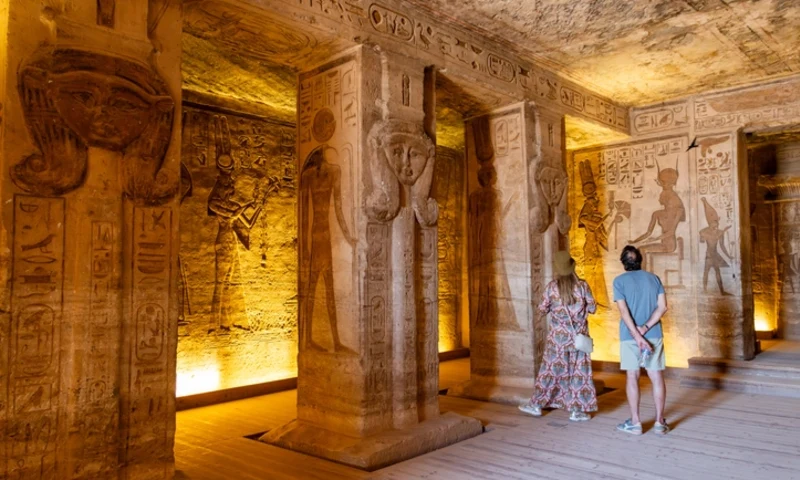
After death, the souls of the deceased had to get through the underworld and arrive at the hall of judgment. Anubis’s task was to guide them and present them to the scales. On one side of the scales, the heart of the dead person was placed, and on the other side, the feather of Ma’at. Thoth would be the one to register the result of the weighing, and depending on that, Osiris, who sat in judgment, would welcome the deceased into the afterlife. Paintings depicting gods were a common sight in many tombs in the Valley of the Kings.
Why Were Ra and Ma’at Essential to Cosmic Order?
The sun god Ra was the center of the universe for the ancient Egyptians. His moving through the sky was the perfect example of order, to which people aspired. After setting in the west, Ra journeyed through the underworld, where he had to endure various challenges before he could rise again in the east. The goddess Ma’at was the personification of order and truth; she was invoked by Pharaohs when they wanted to signify that their rule was just. Common people also prayed to her, as the goddess determined whether a person lived a worthy life or not, as the heart of the deceased would be weighed against her feather.
Where Can Travelers Discover Egyptian Gods and Goddesses Today?
Many of the temples retain the carved record of the Egyptian deities, and visiting them creates the context that no book can. Most of the temples are located near the Nile, so the river is a convenient way to get around.
Which Gods Were Worshipped at Karnak and Luxor?
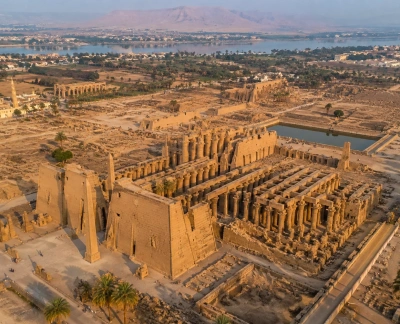
Karnak is the ancient center of the cult of Amun-Ra, also including the temple of Mut and Khonsu, and it reflects the former city’s religious importance. The temple of Luxor is associated with Karnak Temple through the Avenue of Sphinxes, as the gods’ statues traveled from one temple to the other during the Opet Festival. Exploring both temples can give a deeper understanding of the Gods’ households.
Why Are Philae, Edfu and Kom Ombo Important to Egyptian Mythology?
The Philae Temple, located in Aswan, is dedicated to Goddess Isis, with many of its reliefs telling the myth of Osiris. It was also the work’s end, as the last of the ancient rites were performed on the island. The Edfu temple is one of the most preserved in Egypt, dedicated to Horus. The falcon gods’ statues welcome the visitors at the gates. Kom Ombo is the only temple in Egypt that is dual, devoted to the crocodile god Sobek and Haroeris, also known as Horus the Elder. The double temple has two halls, symmetrically decorated and arranged.
Where Else Can Visitors See Ancient Egyptian Divine Symbols?
The Dendera Temple, located to the north of Luxor, is where Hathor’s fame was born. It is recognized by its elegant Hathor-headed pillars. Egypt’s museums house numerous statues and amulets of the gods and goddesses. Most ancient myths reveal their tales on the walls of tombs, on the west bank of Luxor.
Why Do Egyptian Gods and Goddesses Still Fascinate the World?
The ancient gods and goddesses’ popularity partly lies in their dramatic stories, which have survived the centuries in stone and scrolls. It impacts Egypt’s modern art forms and bares Egypt’s ancient legacy, which the visitor will understand when exploring Luxor’s temples and Karnak. The easiest way to uncover the mystery of the ancient gods is by witnessing them firsthand. At the same time, their myths live on in novels, movies, and video games. There is nothing like seeing an actual statue of Horus or a carving of the falcon god, but these are only a part of what the visitor will see in Egypt’s ancient temples. For example, many of them depict the gods’ journey on the sky boat during the night, following the journey of the sun.
Ready to see the ancient gods in Egypt for yourself? We offer the Egypt Tour with Nile Cruise that combines touring cities with a cruise on the Nile River and the opportunity to see ancient ruins. Here are some of the gods and goddesses that you can see in the temples of Karnak, Edfu, and Luxor, and elsewhere.
FAQs
1- Who Were the Main Gods in Ancient Egyptian Religion?
Main gods are Ra, Osiris, Isis, Horus, Anubis, Hathor, Amun, Bastet, Thoth, Set.
2- Who Was the Most Powerful Egyptian God?
Powerful gods are Ra and Amun-Ra, however, popularity may vary depending on the period and locality.
3- Why Did Egyptian Gods Have Animal Heads?
Divine powers and traits were compared to those of animals.
4- Who Was the Egyptian God of Death?
The Egyptian god of death is Osiris, while Anubis takes care of the mummification.
5- Where Can You See Temples Dedicated to Egyptian Gods?
Serapeum, Karnak, Philae, Edfu, Kom Ombo, and Dendera are the most famous ones.