

Introduction
These Egyptian myths never formed one neat book. They grew over thousands of years in temples, tombs, and villages, which is why theses Ancient Egyptian Mythology can appear in several versions of a story.
Table of content:
- Egyptian Myths: Famous Stories and Ancient Legends
- What Are Egyptian Myths and Why Were They Important?
- What Are the Most Famous Egyptian Myths?
- Which Gods and Goddesses Appear in Egyptian Myths?
- What Did Egyptian Myths Reveal About Creation and the Afterlife?
- Where Can You Discover Egyptian Mythology in Egypt Today?
- FAQs
Egyptian Myths: Famous Stories and Ancient Legends
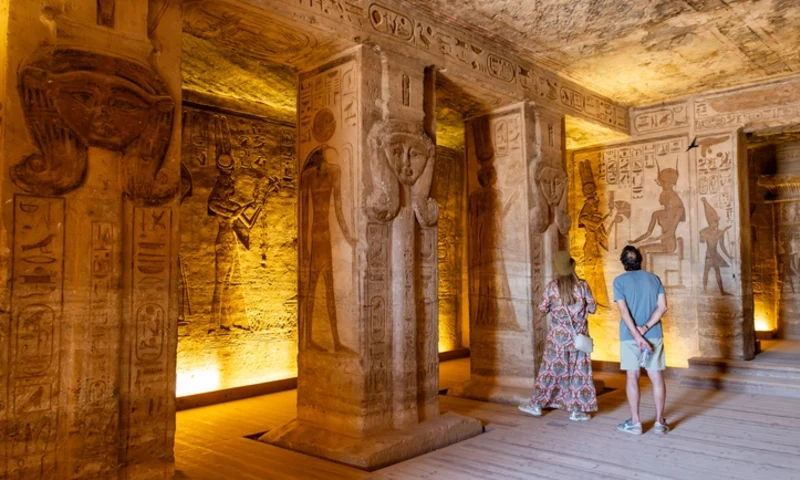
Long before the construction of the pyramids began in Giza, the Egyptians were creating and narrating ancient myths concerning the creation of the world, the reasons why the sun shines every morning, and the life after death. Unlike the modernists, the ancient Egyptians did not write their stories in the form of a particular book. Instead, their stories were developed over thousands of years in tombs, temples, and even everyday settlements, resulting in multiple variations of the same myth, gods, goddesses, and storylines. However, for the contemporary traveler, recognizing ancient Egypt’s mythology is essential, as it brings a different meaning to observing the different attractions. The article below will provide the reader with information on the most famous myths, gods, and the places where Egyptian mythology can be seen and read in ancient monuments such as temples and tombs. Those interested in visiting several of the mentioned attractions can consider Egypt Travel packages available on the website.
What Are Egyptian Myths and Why Were They Important?
Egyptian myths are sacred tales that interpreted natural phenomena for the Ancient Egyptians, such as the annual inundation of the Nile, the movement of the sun, the power of the pharaoh, or the passing of humans into the afterlife.
The Origins and Foundations of Ancient Egyptian Mythology
The Ancient Egyptian mythology origins are difficult to pinpoint because the stories and Gods evolved from early settlers’ local beliefs and varied across different regions of Egypt, particularly nomadic tribes. When ancient Egypt was united, distinct religious practices coexisted, and it seems that Egyptians did not differentiate between various creation myths. In addition, numerous sacred places competed with each other, and Gods were localized in different ancient cities, such as Heliopolis, Memphis, and Thebes. Nevertheless, textual evidence was found in the ancient Egytian mythology history. These writings include Pyramid Texts traceable to more than four millennia and discovered in Saqqara’s pyramids and later inscribed on coffins and papyri.
What Makes the Myths of Ancient Egypt Remarkable?
Ancient Egyptian cultural beliefs influenced thousands of years of human history. Therefore, understanding why the Ancient Egyptians told the stories attributed to Gods and the purpose of their existence is essential. Mostly it was a means for people to bring structure and rationalize the world around them. They believed that order existed because the God’s principle of ma’at confronted chaos and allowed the universe to exist. By narrating and dramatizing these tales, ancient Egyptians invoked the power of Gods to renew and sustain the world. Thus, rituals were performed in festivals, and every event imitated Gods’ actions, determining the fate of humans, animals, plants, and the Universe. For example, the sun rising has a beginning when Gods create the Universe, the annual inundation of the Nile brings fertile land, and a Pharaoh’s coronation reenacts Horus becoming King of Egypt.
The Impact of Ancient Egyptian Mythology on Daily Life
Ancient Egyptians attributed almost everything in existence to Gods’ creation and manifested it in their daily lives. Even the simplest aspects, such as jewelry, involved invocations for protection from maleficent forces. Therefore, it is apparent that mythology was integral to ancient Egyptian life, influencing art, culture, literature, and even the governmental system. Moreover, the stories affected the relationship between people and the government, particularly the Pharaoh, who was considered God’s son on Earth. Ancient Egyptians’ faith explained their rituals and traditions, and numerous Gods and Goddesses were worshiped across Egypt. However, to learn more about the day-to-day lives of Ancient Egyptians and how mythology affected it, it is necessary to consult a complete guide to the life in ancient Egypt.
What Are the Most Famous Egyptian Myths?
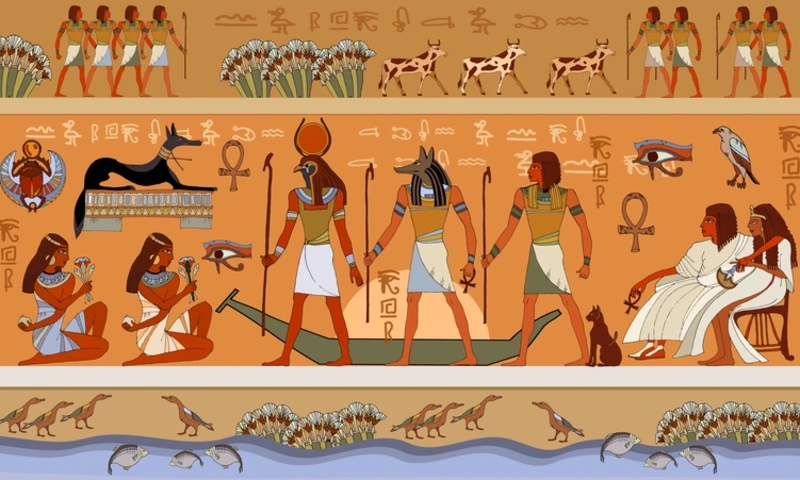
Three stories are recurrent in the annals of Egyptian mythology, depicted on temple walls and stored in museum collections.
What Is the Story of Osiris, Isis and Set?
The most popular story among all of the ancient mysteries of Egypt is the legend of Osiris. Osiris is the righteous ruler whose life was cut short by his brother Set, jealous of the power. Isis, Osiris’s wife, helped him to reassemble the body, after which she brought him to life so that he could take part in the birth of his and Isis’s son Horus. Osiris’s body parts were scattered, but Isis, assisted by her sister Nephthys, managed to collect them all and restore his life. Osiris refused to return to the land of the living; instead, he became the king of the underworld. His story was a symbol of dedication for the ancient Egyptians, and they often depicted it in all kinds of art.
How Did Horus Fight Set for the Throne of Egypt?
Horus grew up and claimed the throne of Egypt belonging to him by right, but Set resisted the transition of power. Horus and Set fought a long legal battle with gods on the jury. Dramatic events took place in two sacred places in Upper Egypt, ancient temples in Edfu and Hermopolis, and were accompanied by various adventures, including a race for the boat as a test of the gods’ candidates. The plot of heresy has survived on the papyrus of the New Kingdom, and in Edfu, there is a great narrative stone tablet dedicated to the myth of Horus and Set. The story reflects ancient people’s thinking about the order and chaos and explains the enthronement of every new ruler since he was considered the reincarnation of Horus.
What Does the Myth of Ra’s Journey Through the Underworld Tell Us?
Ra’s nightly journey through the underworld, which consisted of twelve hours, was described in the Amduat text. Every day, the sun god Ra was sailing on a ship through the sky, but at dusk, he had to reach the underworld and go through many challenges and adventures. He had to fight against the huge serpent Apophis, against whom the gods of Egypt gathered to fight at the edge of the world. Every night, they managed to withstand the monster and bring order to the world, and Ra continued his voyage. This myth explained the sunrise to the ancient Egyptians, as the god’s ship crossed the horizon at dawn, which also symbolized hope, since Ra began his journey anew every day.
Which Gods and Goddesses Appear in Egyptian Myths?
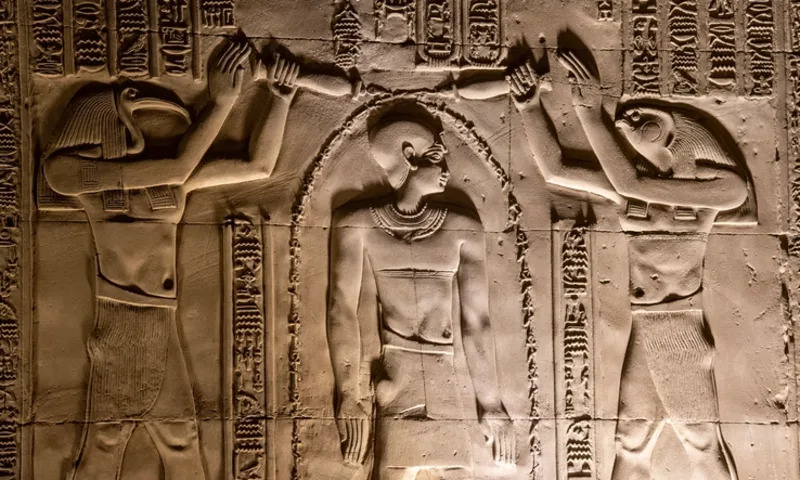
Ancient Egypt mythology contains numerous deities, but only several of them are central to the most popular stories.
Who Were Ra, Osiris, Isis and Horus?
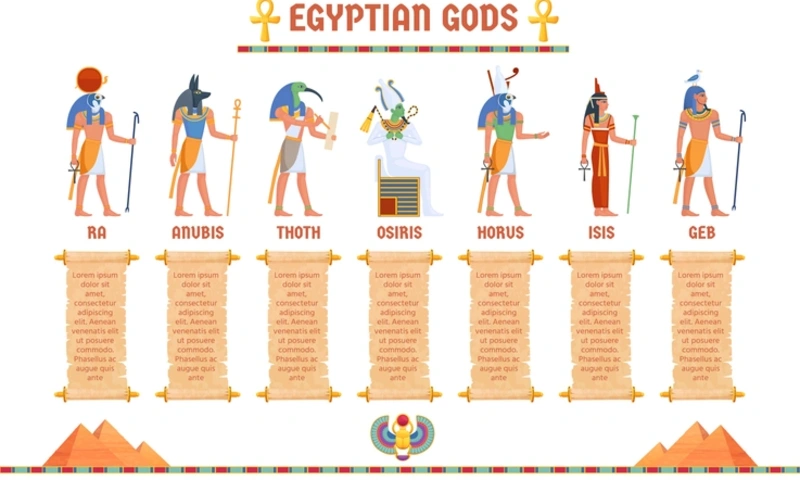
Ra was the sun god, sometimes considered to be the creator and the king of gods, later merged with Amun into Amun-Ra. Osiris was the ruler of the underworld, associated with resurrection and fertility; the ancient Egyptians also revered him as the ideal harvest rich and bountiful. Isis is the goddess of magic and protection, one of the most popular gods in the Mediterranean. Horus was the sky god, depicted as a man with a falcon’s head, and the patron of the pharaohs.
What Roles Did Anubis, Thoth and Hathor Play?
Anubis was the guardian of the underworld and the patron of embalmers, depicted as a man with a jackal’s head or in the form of the jackal itself. Thoth was the scribe god and the patron of the moon; he was depicted as an ibis-headed man and wrote the verdicts for the gods and humans who died and arrived in the underworld. Hathor was the goddess of love and motherhood, depicted with a cow’s ears or horns.
Why Did Egyptian Gods Have Animal Features?
Mythology recreated gods in the forms of animals or combined human and animal features. Gods inherited features characteristic of the animals they were depicted in far vision for Horus because of the falcon’s eyes, the jackal’s nose for Anubis because of the animal’s frequent presence at burial sites, and the cow’s heart for Hathor because of the animal’s maternal love for her calf. These features were chosen because of their symbolic meaning, and not because of a specific worship of animals otherwise, Egyptians would have worshiped animals themselves. That is why gods could also have a human appearance or a combined one.
What Did Egyptian Myths Reveal About Creation and the Afterlife?
Creation and the afterlife are the tradition’s most essential aspects and are often connected to water, light, and rebirth.
How Did Ancient Egyptians Explain the Creation of the World?
One of the most prominent myths narrates about Nun, the primordial water, from which the first mound of earth appeared. On the mound appeared Atum, the creator god, from whose tears and mucus came to be Shu (air) and Tefnut (moisture). They in turn created Geb (earth) and Nut (sky), who gave birth to Osiris, Isis, Set, and Nephthys. In Memphis, the creation account was different, as it narrated about Ptah who used his mind and speech to create the world. It has been suggested that the notion of a primordial mound was derived from observing riverbanks emerging from the water when the flood receded.
What Happened to the Soul After Death?
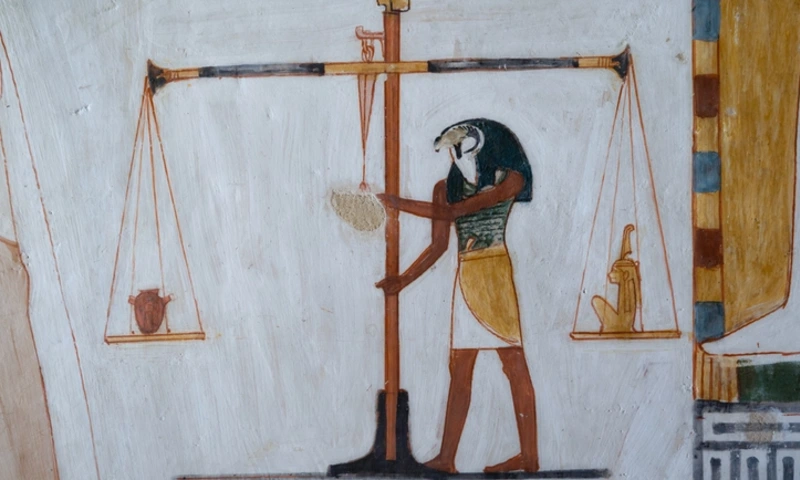
The ancient Egyptians believed that the souls of the deceased had to undergo several challenges before reaching the afterlife. After death, a person’s physical body was subjected to embalming, and the soul needed to get past the guardians who questioned the deceased on their life and the answers were correct, they could proceed to the next stage. With the help of specific incantations, the deceased could arrive at Osiris’s throne and undergo judgment regarding their worth to enter the afterlife. Burial goods, mummification, and wall paintings in tombs were aids in ensuring a smooth transition for the afterlife. Ancient Egyptians elaborately painted their crypts in the Valley of the Kings to depict the journey through the Duat, the underworld, following instructions in the “books of the underworld.”
Why Were the Heart and Feather of Ma’at Significant?
According to the “Weighing the Heart” chapter from the Book of the Dead, after death, an individual’s heart was weighed against the Ma’at’s feather on a scale. Anubis, the god, presided over the proceedings, and the outcome was recorded by Thoth. If the heart was found to be as light as the feather, it signified that the person’s soul was in harmony with ma’at, and the deceased was admitted into the paradise-like realm called the Field of Reeds. Otherwise, the soul would be devoured by the beast Ammit. The heart and the feather’s significance is depicted in several paintings in the tombs of ancient Egypt, particularly the one narrating the events from the Book of the Dead. It shows the Egyptians’ obsession with living righteously in accordance with ma’at.
Where Can You Discover Egyptian Mythology in Egypt Today?
Reading these stories at home is one thing, but standing where they were carved is quite another. A Nile route runs past most of the following sites, and an Egypt Nile cruise stops at several of the temples.
What Mythological Stories Can You Discover at Philae Temple?
The legend of Isis and Osiris is one that seems particularly fitting at Philae Temple, Egypt, which is dedicated to Isis and features reliefs showing her with Osiris and his son Horus. Local legend tells that Osiris was buried on nearby Biggeh island, and Philae was one of the last temples still in use in Egypt, right up until the sixth century AD. A boat ride around the corner leads to this temple, which adds to the mystique of its setting.
How Do Karnak and Luxor Temples Reflect Ancient Egyptian Beliefs?
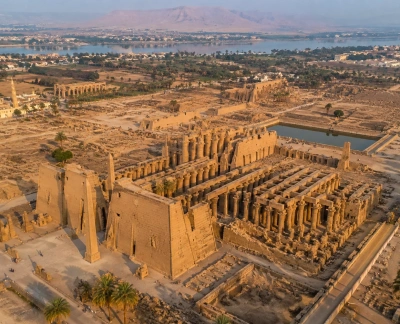
The Karnak Temple, dedicated to Amun-Ra and home to the Theban trinity of Amun, Mut, and Khonsu, is adorned with colossal columns and carvings that depict pharaohs presenting offerings to the gods. During the annual Opet Festival, the statues of the gods were paraded from Karnak to Luxor Temple, symbolizing the journey of the gods to the city of Luxor.
What Do the Tombs in the Valley of the Kings Reveal About the Afterlife?
On the west bank of the Nile lies the Valley of the Kings, where pharaohs were laid to rest in tombs decorated with scenes concerning Ra’s nightly journey, the Duat, and the weighing of the heart. Meanwhile, the Edfu temples are adorned with the tale of Horus and Set, which covers the whole of the ancient Egyptian underworld.
Why Do Egyptian Myths Still Capture the Imagination Today?
The myths of the ancient Egyptians have persisted for millennia because they deal with issues that are relevant to any society, such as the creation of the world, how to live a good life, and what happens after death. They also have an extensive impact on the wider world, being a source of inspiration for countless literary and artistic works and films. Moreover, visiting the sites associated with the legends in Egypt makes the stories come to life.
To capture the magic of it all, consider booking an Egypt tour with Trans Travel. The combination of Cairo and the Nile cruise Package allows tourists to see the best of both the pyramids and the temples. By booking a tour, it becomes possible to explore the history of ancient Egypt and the vibrant mythological cosmos that fueled its people’s imaginations for centuries.
FAQs
1- What Are the Most Famous Egyptian Myths?
The myths of Osiris, Isis and Set, the duel between Horus and Set, Ra’s daily voyage through the underworld, and the cosmogonic myth about the creation of the world are some of the most famous.
2- Who Was the Most Important God in Egyptian Mythology?
Depending on the historical period and the local community, gods such as Ra, Amun, Osiris, and Isis were especially prominent.
3- What Is the Egyptian Myth of Creation?
The ancient Egyptians had several different creation myths. In the most influential ones, the creation of the world is attributed to Atum andPtah. According to the first, the world was created from the primordial chaos called Nun, and Atum appeared on the first island that appeared. Meanwhile, the Memphis creation myth claims that Ptah created the world through abstract thinking and articulate speech.
4- What Did Ancient Egyptians Believe About the Afterlife?
The ancient Egyptians believed that life after death was possible, but it depended on whether a person successfully passed the Duat, the underworld, and its guardians, and a trial in front of Osiris.
5- Where Can Tourists Explore Egyptian Mythology Today?
Some of the best places to experience Egyptian mythology are the temples of Philae, Karnak, and Edfu, and the Valley of the Kings, where many myths were depicted.