Introduction
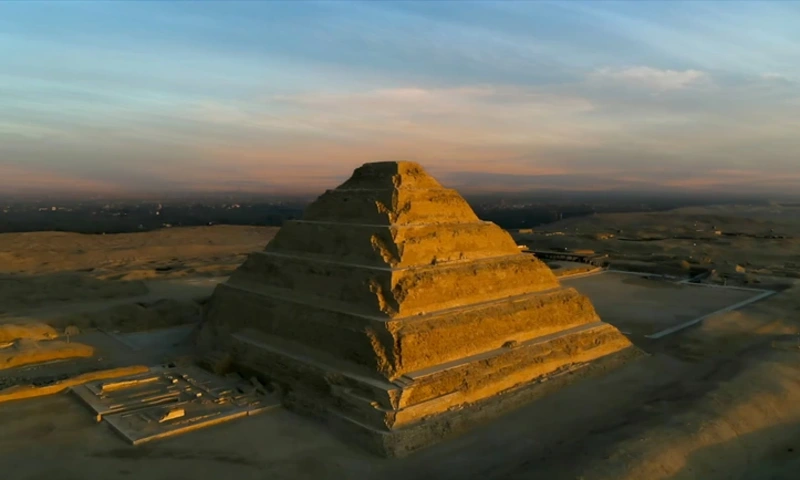
A low wall of pale limestone, a colonnaded passage, and then a pyramid rising in giant steps out of the desert. This is the Step Pyramid of Djoser, one of the earliest large stone monuments built anywhere in the world and the structure that set Egypt on the road to the smooth-sided pyramids of Giza.
Table of content:
- Step Pyramid of Djoser: Saqqara Egypt Guide
- Why Is the Step Pyramid of Djoser So Important in Ancient Egypt?
- How Was the Step Pyramid of Djoser Built?
- What Can You Discover Around the Step Pyramid of Djoser?
- What Makes Saqqara Egypt an Extraordinary Archaeological Site?
- How Can You Plan a Visit to the Step Pyramid of Djoser?
- FAQs
Step Pyramid of Djoser: Saqqara Egypt Guide
Constructed from a low white limestone wall, colonnaded corridor and giant step-like structure, the Step Pyramid of Djoser is one of the first massive stone structures built in the world and kick started construction of the smooth sided pyramids in Giza. However, once exploring Saqqara Egypt, you will quickly realise that this is just one element of the massive necropolis. The plateau is filled with tombs, temples and underground chambers. This guide will explain how the pyramid was constructed, what surrounds it and how you can include it in your trip from Cairo.
If you are fascinated with Egypt’s earliest pyramid, continue your Egypt tour with our Egypt Nile Cruise Package.
Why Is the Step Pyramid of Djoser So Important in Ancient Egypt?
This was where they went from building mud brick homes to grandiose stone buildings and set the template for all the pyramids to come.
What Makes This Pyramid Unique?
While the Pyramids of Giza are true pyramids with smooth sloping sides, the shape of Djoser’s pyramid is very distinctive. The pyramid has 6 distinct steps and looks like a huge staircase. This was also built several generations before Khufu’s Great Pyramid, so it appears to be an experiment. The Giza pyramids were built to improve on this design, which can be seen in our guide to the Pyramids of Giza. Seeing both together on the one trip helps to understand how the design evolved.
Who Was King Djoser?
King Djoser (sometimes spelled Zoser) ruled during Egypt’s Third Dynasty around 2700 BCE. He chose to build a permanent burial complex in Saqqara close to the capital, Memphis. This was to ensure he would have a place in the afterlife, but also to show off the power of the king through stone. Many scholars believe that the step design was to represent a staircase for the king’s soul to ascend to the sky.
How Did Imhotep Influence Ancient Egyptian Architecture?
Imhotep, traditionally believed to have been the architect, took the flat-roofed mastaba tombs that had been used for previous burials and placed smaller mastabas on top. What was even more impressive was that he was using carved stone to build on a scale that had never been tried before. He was so well known that the Egyptians later revered him as a wise man and in later times he was worshipped as a healing god.
How Was the Step Pyramid of Djoser Built?
The pyramid was not designed as a one-off.
What Is the Unique Design of the Six Step Pyramid?
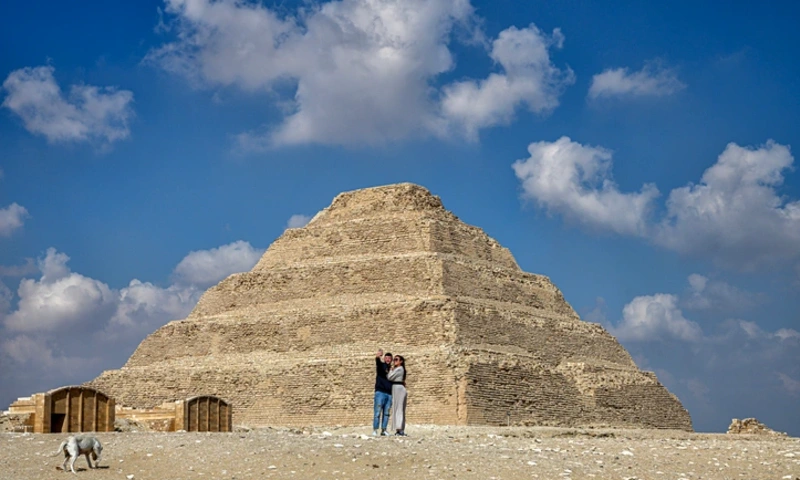
This was originally built as a square mastaba but expanded on many occasions to create a six-Step Pyramid. This means there are 6 stone steps, each smaller than the last, stacked on top of each other. The layers are clear to see where the limestone has weathered.
How Did the Ancient Egyptians Build the Pyramid Complex?
The pyramid was built using small limestone blocks. The stones were placed in courses leaning inwards. This technique was taken from mud brick buildings to ensure the pyramid was stable. Teams of workers would extract the stone from nearby quarries and carve them using copper and stone tools. The stone was then transported around using sledges and ramps. This was a large project and required organisation and a strong king. Djoser is mentioned in our guide to Ancient Egyptian Pharaohs.
What Is Inside the Pyramid?
There is a shaft that goes deep down to a granite lined burial chamber. There are tunnels and galleries surrounding the chamber. Some rooms were decorated using blue faience tiles. There are tens of thousands of stone vessels stored within the galleries. The chambers have had different access points over the years so it is best to check what is available.
From the pioneering architecture of Saqqara to the beautiful temples of Upper Egypt, uncover more ancient wonders with our Egypt Tour with Nile Cruise.
What Can You Discover Around the Step Pyramid of Djoser?
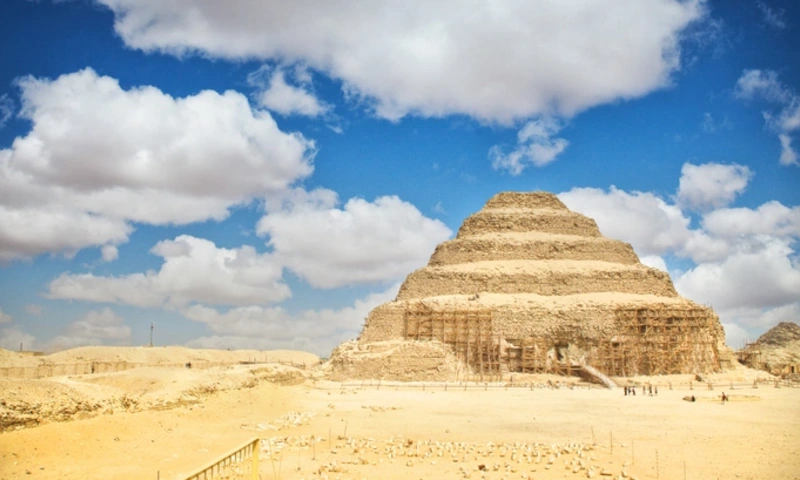
The pyramid is located within an area of many tombs, temples and tunnels, which are worth taking your time to explore.
What are the Most Interesting Tombs?
The tombs of nobles and officials are beautifully decorated with painted reliefs depicting life during the Old Kingdom. The tomb of Mereruka (a vizier of the Sixth Dynasty) has over thirty rooms while the tomb of Ti has scenes of farming, fishing and boat making. These provide a lively contrast to the large buildings around.
What makes the Pyramid of Unas Unique?
The pyramid of Unas was built by the last king of the Fifth Dynasty. The walls inside have the Pyramid Texts, one of the oldest surviving religious texts in the world. The burial chamber also has a blue ceiling covered with stars. Access to the inside can vary.
Why visit the Serapeum at Saqqara?
The Serapeum is an underground complex where the sacred Apis bulls were buried. They were placed in large stone sarcophagus and each had its own chamber leading off a long gallery. The site was uncovered in the 19 th Century by French archaeologist Auguste Mariette. Walking around the desert underground with these large stone coffins really shows just how serious this cult was. Access can vary.
What Makes Saqqara Egypt an Extraordinary Archaeological Site?
Saqqara is a necropolis and has many layers of history.
Why Was Saqqara Used as an Ancient Burial Site?
Saqqara was used as the burial ground for Memphis, the capital of Egypt for much of the Old Kingdom. This is why it was used for burials for around 3000 years. It is located at the edge of the desert so was perfect for tombs. It was also very prestigious as it was near the capital. The Saqqara is part of the UNESCO World Heritage Site of Memphis and its Necropolis, Pyramid Fields from Giza to Dahshur.
What Have Archaeologists Found?
Archaeological work has been taking place here since the nineteenth century. Excavations have uncovered sealed coffins, tomb chapels and mummification workshops. A French architect, Jean-Philippe Lauer has spent decades researching and restoring Djoser’s complex. New information is still being discovered every season. The site is always changing so you will always see something a little different.
What Can You Learn at the Imhotep Museum?
The Imhotep Museum is located near the entrance to the site and gives you an introduction to Saqqara with artefacts from the excavations. You can visit to gain some background knowledge before visiting the monuments outside. Opening times may vary so be sure to check in advance.
How Can You Plan a Visit to the Step Pyramid of Djoser?
With a little preparation this can be an easy half or full day trip from the capital.
Where is Saqqara and how to get there from Cairo?
Saqqara is located on the west bank of the Nile around 30km south of central Cairo. This is near to the ancient capital of Memphis. The majority of people visit Saqqara either by private car or joining an organised tour. See our Cairo City Guide for more information on the capital.
What to know Before Visiting the Pyramid Complex
To make the most of your visit wear comfortable shoes as the walkway is sandy and bumpy. Bring some water and sun cream. Opening times, tickets and access to the inside of the pyramids can vary so check for up to date information. Having a little flexibility will help. Having a guide will give you lots of background information.
Can I visit Memphis and Dahshur with Saqqara?
Yes! Many people do. Memphis is the ancient capital and now has an open air museum with a massive statue of Ramesses II. Dahshur has the Bent Pyramid and the Red Pyramid built by Sneferu. All three sites together will allow you to see how the pyramids developed.
Why should I visit the Step Pyramid of Djoser?
Having the opportunity to see the first great pyramid next to this pyramid will show you where the pyramid age in Egypt began. This is a great way to add a more reflective part to your trip. It can be easily combined with Cairo and other pyramid complexes to give the famous monuments more meaning. Our Egypt Travel Guide can help you plan Saqqara into your wider route.
Ready to discover more of Egypt outside of the most famous sites? See our Cairo and Nile Cruise Package.
FAQs
1- Where Is Djoser’s Step Pyramid Located?
It stands at Saqqara, on the west bank of the Nile about 30 kilometres south of Cairo, near the ancient capital of Memphis.
2- How Old Is Djoser’s Step Pyramid?
It was built around the 27th century BCE, during the Third Dynasty, which makes it more than 4,600 years old.
3- Who Designed Djoser’s Step Pyramid?
Imhotep, a high official under King Djoser, is traditionally credited as the architect. He is remembered for introducing cut-stone construction on a monumental scale.
4- Can Visitors Enter Djoser’s Step Pyramid?
Interior access has varied over time, so check current arrangements before you visit. The surrounding complex, including the colonnaded entrance and courtyards, can be explored.
5- Is Saqqara Worth Visiting from Cairo?
Yes. It is close to the capital and shows the beginning of pyramid building, with tombs, reliefs, and a museum nearby. Many travelers combine it with Memphis and Dahshur.