

Introduction
Philae Temple, which is situated on Agilkia Island near Aswan, is a complex of sanctuaries, gateways, colonnades and other monuments, all of which are linked with the worship of Isis. Although within the Archaeological Site of Philae Temple, visitors usually refer to the Temple of Isis, the main center of the sanctuaries of the worship of Isis, as simply Philae Temple.
The structure of the sanctuary was primarily during the Ptolemaic and Roman periods, yet the cult of Isis continued for centuries. The complex was even further modified for Christian use. Today, however, in addition to its long history, there is another layer of history to the Temple of Isis as it stands today on Agilkia Island.
All of the structures that make up the Archaeological Site of Philae Temples were moved from their original island in a worldwide campaign to save Nubian antiquities from the rising waters of the Nile.
This site of the Egyptian temples in Aswan is a great place for travelers to explore the development of Egyptian religions over different time periods.
Table of content:
What Is Philae Temple and Where Is It?
The Philae complex is now located on Agilkia Island in Aswan Governorate. Its present position is important because this is not the original Philae Island on which the monuments were built.
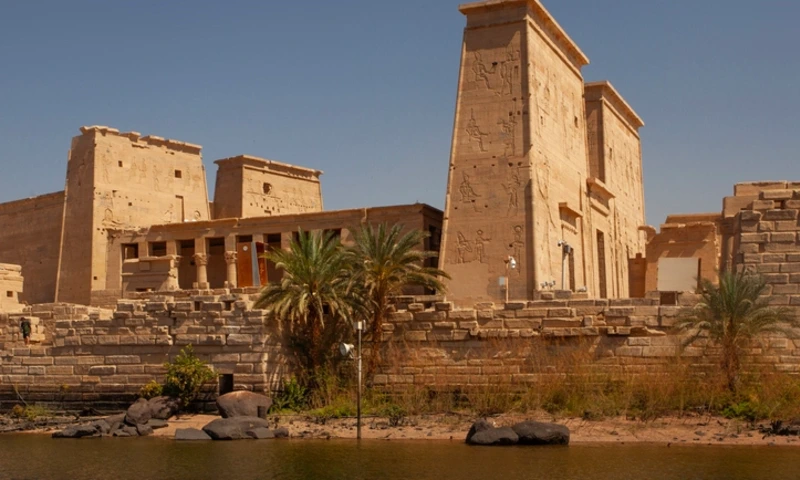
The archaeological complex is reached by water, so the approach to the island forms part of the visit. Once ashore, visitors enter a site made up of more than a single sanctuary. The Temple of Isis dominates the complex, but other surviving structures help show how Philae developed over centuries.
The monuments form part of the UNESCO World Heritage property Nubian Monuments from Abu Simbel to Philae, which includes archaeological sites stretching through the Aswan region toward Egypt's southern border. Travelers planning a wider stay can place Philae in context through the Aswan Travel Guide or combine the area's archaeological sites with Egypt Nile Cruises.
The Temple of Isis
The principal sanctuary was dedicated to Isis, one of the major deities of ancient Egyptian religion. According to Egypt's Ministry of Tourism and Antiquities, construction of the principal temple was begun by Ptolemy II Philadelphus, who ruled from 285 to 246 BCE.
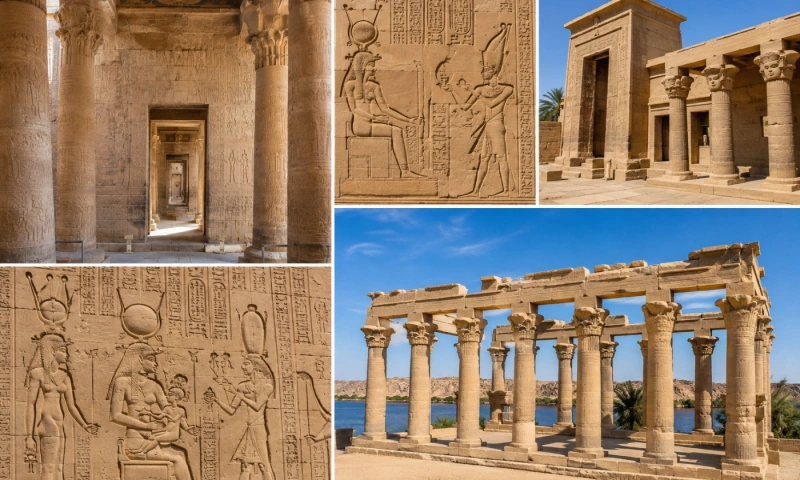
Within the complex, religious scenes connect Isis with Osiris and their son Horus. The mammisi, or birth house, includes imagery related to the birth of Horus, including a representation of Isis nursing her son. These scenes make the sanctuary useful for understanding the mythology that shaped the site's ritual purpose.
What Is the History of Philae Temple?
Philae Temple is not a temple of one ruler, but it is the history of several periods of politics and of religion. Most of the existing parts of the sanctuary date from the Ptolemaic and Roman periods. However, buildings, reliefs, inscriptions and additions to the complex were provided by successive rulers.
Philae, in particular, was an important center for the worship of Isis. UNESCO calls Philae the great Ptolemaic sanctuary of the goddess and notes its great reputation from Greco-Roman antiquity for its temples as well as for other structures associated with them.
Finally, Philae Temple’s history also records for us a great transition period in Egypt’s history. A priest by the name of Esmet-Akhom, of the Temple of Isis, Philae, was the last dated hieroglyphic inscription in all of Egypt, dating back to 394 CE. He was followed by the early Christianity era when parts of the Temple were re-constructed for use as a church, while some of the older carvings in the temple were even defaced.
For all the reasons mentioned above Philae differs from the majority of the temples in Aswan. The walls of this sacred place bear testimony of many centuries of worship and adaptation to the changing needs of the followers of different religions.
What Can You See Inside Philae Temple?
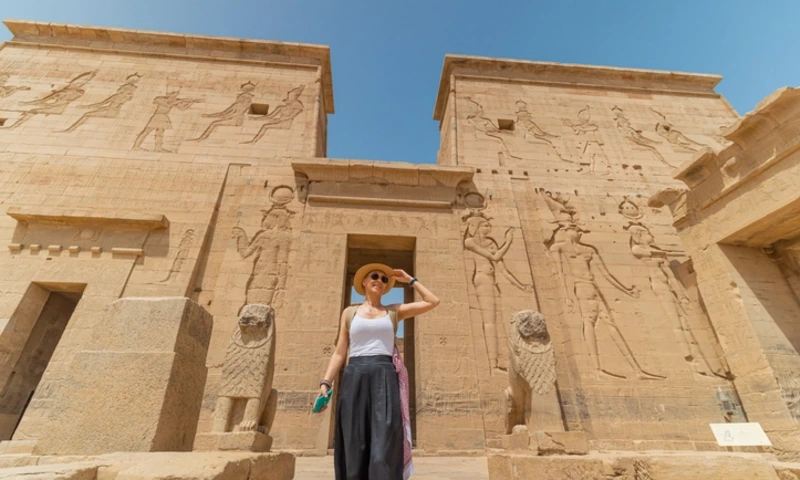
Upon entering the Philae Complex, one can see the various scales of architecture that were built in order to create a large complex for the various Temples. There are the large Pylons that lead to the Courtyards. Within these spaces are increasingly closed off Temples and the use of columns, carved surfaces, inscriptions of hieroglyphs, and religious relief paintings.
Although architectural decoration typically serves to add another dimension to a building, in this case the relief decoration is of greater importance than the architecture. Images of pharaohs making offerings to deities as well as scenes that contain members of the divine family of Isis, Osiris and Horus all served a purpose and identify the relationship of kings to religion.
The Temple of Isis Interior
In contrast to the Temple of Isis’s exterior, there is great contrast between the Temple of Isis Interior and the Temple of Hathor. Rather than large ceremonial areas that are gradually brought to a focus, there are several increasingly small sacred spaces.
Relief on the interior walls of Philae Temple and other buildings of the complex can be studied in great detail. Rather than viewing single relief sculptures as freestanding works of art, they can be studied in relation to the gateways, courts, and other architectural areas of the buildings, to gain an understanding of their functions in the structure of the Temple as a whole, i.e., the sanctuary, and in terms of the temple’s functions in the overall complex of Philae.
The Mammisi and Temple of Hathor
This is the mammisi associated with the divine birth of Horus, and it contains scenes of Isis and her son, to reinforce the connection between the temple of Isis and the worship of Horus.
Near the mammisi for the birth of Horus is another temple, dedicated to Hathor, the temple of Hathor was constructed by Ptolemy VI Philometor and later by the Roman Emperor Augustus.
Trajan's Kiosk
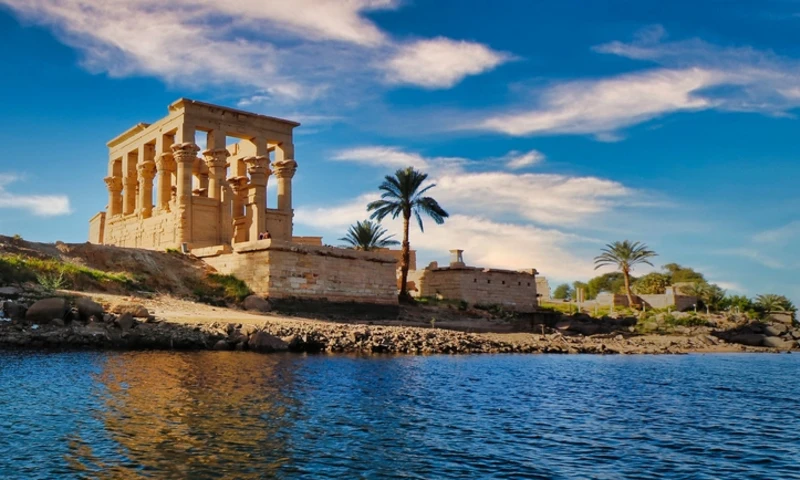
Trajan's Kiosk is a clearly recognizable feature at Philae. A building with an open architecture, made up of clearly recognizable and well-ordered rows of columns, is a clear contrast to the closed up spaces of the Temple of Isis.
Built during the reign of the Roman Emperor Trajan, (98-117 CE) the Kiosk has had its roof destroyed, but the columns have stood firm. The scenes depict the Emperor making offerings to the gods of Egypt, including Isis, Osiris and Horus.
Why Was Philae Temple Moved to Agilkia Island?
The site is located on Agilkia Island and was saved as part of the major archaeological conservation project in the 20th century.
Changes in the flow of the Nile caused by dam construction affected all the archaeological sites in Nubia. As the water rose from time to time already at Philae, when the Aswan High Dam was completed under wide development of the area, all archaeological sites of Nubia were in danger.
UNESCO’s international conservation campaign for the monuments of Nubia, launched in 1960, aimed at saving all the archaeological sites of Nubia. For Philae, the solution was not to bolster the island where the monuments were situated and which, periodically, would sink below the surface of the water. The entire complex of monuments was disassembled and re-erected on Agilkia Island.
In 1972 work started to prepare the Agilkia Island for the re-location of the Philae Temples. The reconstruction of the temples started in 1977.
The re-arrangement of the sites has been carefully planned in order to recreate the relationships of the individual sites as far as possible. The Philae Temple relocation in particular forms a central part of the site’s modern history and of the International effort to save the Archaeology of Nubia.
For those who are interested in the efforts of conservation and would like to continue on south to learn more there is a Guide to the Temples at Abu Simbel.
How Does Philae Compare with Other Temples in Aswan?
Aswan's archaeological landscape covers a much broader period than Philae alone. UNESCO's World Heritage property in the region includes Philae alongside Abu Simbel, Kalabsha and several other monuments, as well as the remains of Elephantine and Aswan's ancient stone quarries.
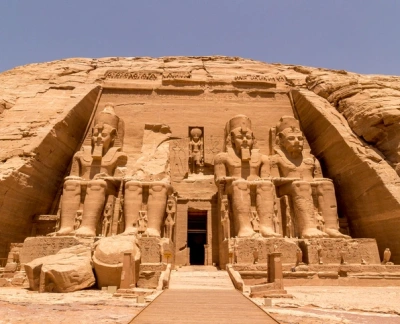
Philae stands apart because of its strong connection with Isis, its predominantly Ptolemaic and Roman character, and its long religious life. It also provides a useful contrast with the rock-cut temples of Abu Simbel, built many centuries earlier under Ramesses II.
Travelers building a longer Upper Egypt itinerary can connect these sites through Egypt Travel Packages, while those timing a southern Egypt visit around the solar alignment at Abu Simbel can consult the Abu Simbel Sun Festival Guide.
How to Visit Philae Temple
Because the archaeological complex occupies an island, visiting Philae involves a boat journey. This separates the experience from many land-based archaeological sites around Aswan and gives visitors a clear view of the temple structures as they approach Agilkia.
Allow enough time on the island to look beyond the largest gateways. The smaller buildings, reliefs, columns, and changes between open and enclosed spaces help explain how the complex worked as a religious center.
Current opening hours, ticket arrangements, boat procedures, and access conditions can change. Check official visitor information when planning your trip rather than relying on older schedules. Travelers who prefer to arrange Philae alongside other local sites can also compare relevant Aswan tours and excursions.
Practical Highlights
- Location: Agilkia Island, Aswan, Upper Egypt
- Principal sanctuary: Temple of Isis
- Main historical periods: Predominantly Ptolemaic and Roman
- Notable structures: Temple of Isis, mammisi, Temple of Hathor, Trajan's Kiosk
- Access: By boat to Agilkia Island
- Heritage status: Part of the UNESCO-listed Nubian Monuments from Abu Simbel to Philae
- Modern conservation: Relocated from the original Philae Island during the UNESCO Nubia campaign