

Introduction
Imagine a group of men walking out of a peaceful desert valley just before sunrise. As they climb up the hill they carry chisels and brushes on their back as they head into the royal valleys. This is just a typical day in Deir el Medina, a artisans village that was home to the pharaohs craftsmen. Although most tours in Luxor focus on the stories of Kings and Queens this village brings a completely different aspect of Luxor to life.
Table of content:
Deir el Medina: Discover Ancient Egypt’s Artisans Village
Imagine a group of men walking out of a peaceful desert valley with chisels and brushes on their back towards the royal valleys beyond. This was a typical morning in Deir el Medina. Deir el Medina is a settlement on the West Bank of Luxor which was home to the craftsmen working for the Pharaohs. While most itineraries in Luxor focus on the kings and queens, here we have an insight into the lives of the artisans village. The settlement has lots of humble homes, brightly painted family tombs and thousands of notes written by the workers themselves. It is one of the few places in Egypt where we can see how people lived on a daily basis. This guide will tell you all about who lived here, what they did, what remains today and how to include a visit into your itinerary.
Looking to get off the beaten track in Ancient Egypt? Check out our Egypt Travel Packages.
What Is Deir el Medina And Why Is It Important?
Deir el Medina is a small area of archaeology situated within a valley of the Theban hills. It is home to a planned settlement that was inhabited for around 4.5 centuries during the New Kingdom. The site was excavated by Italian and French teams in the early 20 th century. Due to the high quality of the findings, it is highly valued by historians. For more information on how everyday people lived check out our guide to life in Ancient Egypt.
Where Is Deir el Medina Located In Luxor?
The settlement is located on the West Bank of Luxor. It is located in a protected valley between the Valley of the Queens and the Ramesseum. It is a short drive away from the Valley of the Kings. In Ancient Egypt this area was part of Thebes, the capital of the New Kingdom. The impressive temples were located on the East Bank and cemeteries were located on the hills in the west.
Why Was The Worker’s Village Built?
A permanent skilled workforce was required to work on the royal tombs. Housing the workers near the Valley of the Kings meant that the workers could be efficient and the work kept secret. The settlement was called by the Egyptians Set Maat meaning ‘the Place of Truth’. It was built early in the 18 th Dynasty to house the workers and their families.
What Makes Deir el Medina Unique In Egypt?
Most monuments were built to impress the Gods. However, this settlement has lots of homes, streets, chapels and a huge collection of notes. This means we can learn about how everyday people lived, see our guide to Ancient Egyptian Pharaohs.
Who Built and Decorated the Pharaohs’ Tombs?
Each craftsperson had their own tools and training. Stone cutters would carve the tunnels and rooms out of the limestone. Plasterers would smooth the walls. Draftsmen would draw and amend their design using red and black ink. Painters and sculptors would finish off the decoration. Often the workers would live in very basic huts around the site for the week.
How Were The Ancient Egyptian Artisans Village Organised And Paid?
The Artisans Village was split into two teams, the right hand side and left hand side. Each team was lead by a foreman. Scribes would keep track of who was there, their tools and materials. The vizier would oversee the workers on behalf of the king. They were paid in state food rations, including grain, fish, vegetables and oil. This system was very efficient and lasted for centuries.
Did The Workers Of Deir el Medina Ever Go On Strike?
Yes. In around 1157 BC during the rule of Ramesses III the workers were delayed receiving their rations. The workers stopped working and marched to nearby temples to voice their concerns. This incident, which is often referred to as the first ever documented labour strike in history, has been recorded on a papyrus now in Turin.
Would you like to visit the temples and tombs that these craftsmen helped create? Take a look at our Egypt Cairo Luxor Tour.
What Was Daily Life Like in the Artisans Village?
The well planned and enclosed nature of the settlement has meant that we can understand how the village was laid out. The village had a regular routine with long days in the valleys and evenings at home.
What Were The Houses And Streets Like?
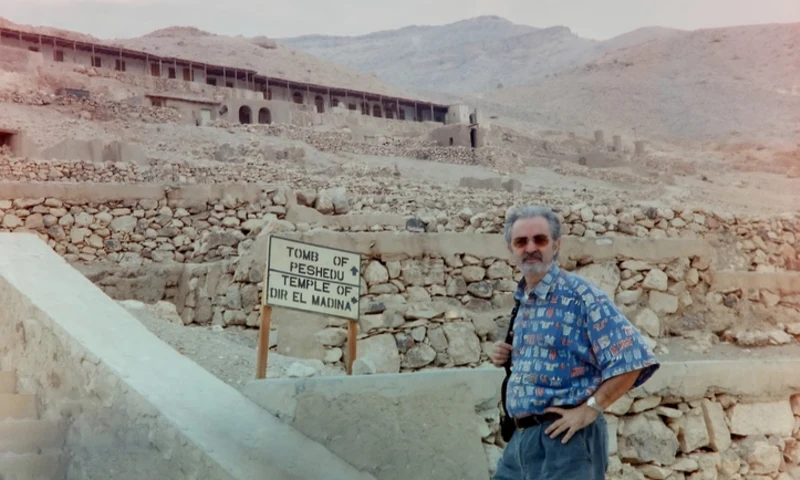
There was one main road in the settlement with about seventy small houses made from mudbricks and stone. Most houses had one main room at the front, a few smaller rooms and a staircase leading up to a flat roof. At the back of the house there were kitchens and storage areas. There were chapels and wells around the village. The workers also had tombs on the hillside.
How Did Families Live In Ancient Egypt?
As men would have spent a lot of time working during the week women would have taken charge of the household. Women would have baked bread, brewed beer, spun and wove. Children would have helped out with chores. Many boys would have learned their father’s trade. Documents found from the village show women owned property and had their own wills.
What Can Be Learnt From The Letters And Ostraca?
The workers would write on ostraca. These are pieces of limestone and broken pottery that were used as paper. There are thousands of ostraca. They tell us about the workers illness, family events, festival days and arguments with neighbours. They also tell us what tools and materials they had. We get a personal insight into what life was like for this community.
What Can Visitors Discover Inside Deir el Medina Tombs?
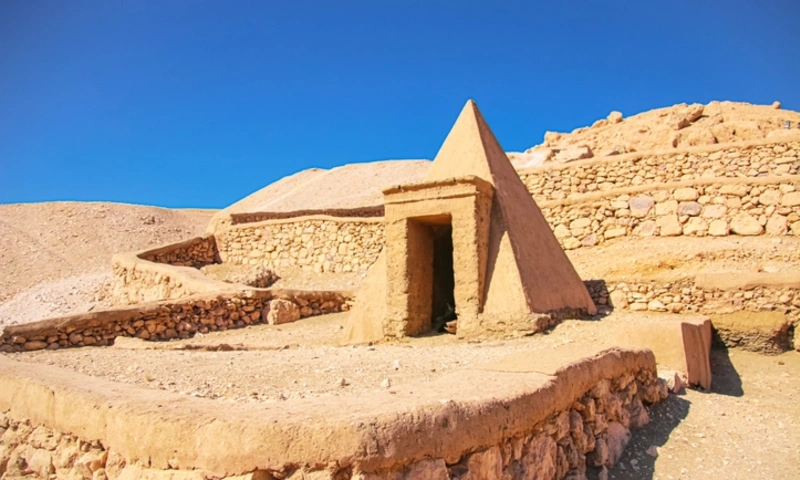
The Artisans Village had their own tombs up on the hillside. These were not as large as the royal tombs, however they were often more colourful. This is because the families paid for the tombs to be created by the craftsmen. Many tombs had small pyramids made of mud bricks on top of the chapel inside. There was also a vaulted burial chamber underneath. Compare this to our guide to the Egypt Valley of the Kings.
Why Are the Tombs of the Workers Beautifully Decorated?
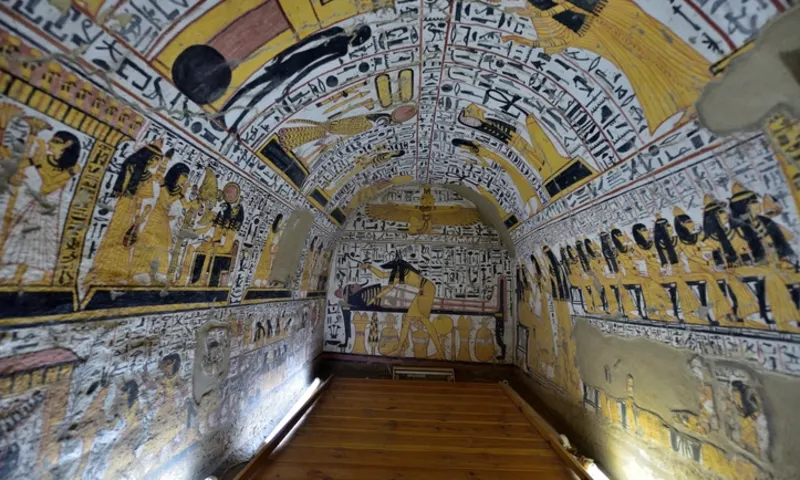
Since these men were painters for the Kings they put a lot of effort into decorating their tombs. There are pictures showing the owner of the tomb in front of the gods, family members making sacrifices and pictures to ensure they have an easy life in the afterlife. The colours are bright and the lines are bold.
What Makes the Tomb of Sennedjem Unique?
Sennedjem was a Servant of the Place of Truth during the reign of Seti I and Ramesses II. His tomb contains a small vaulted chamber full of beautiful paintings. The most famous is of him and his wife Iyneferti harvesting crops in the Field of Reeds. The Field of Reeds was the peaceful afterlife in Egyptian beliefs. This is one of the best preserved painted tombs.
What Can We Learn About Ancient Egyptian Beliefs From the Tomb Paintings?
There are many gods shown such as Osiris and Anubis. The paintings show the deceased going through judgment and into the afterlife. By seeing regular people with the same symbols as the Kings we can see how popular these beliefs were.
How Can You Visit Deir el Medina in Luxor?
Deir el Medina can be easily visited on the same day as other sites on the West Bank.
How to get to Deir el Medina from Luxor
Cross the Nile on either a bridge or ferry. Once across, take a taxi or pre-arranged transfer to reach Deir el Medina. It is often visited alongside other sites on the West Bank and your driver/guide can help you plan your day.
What to see
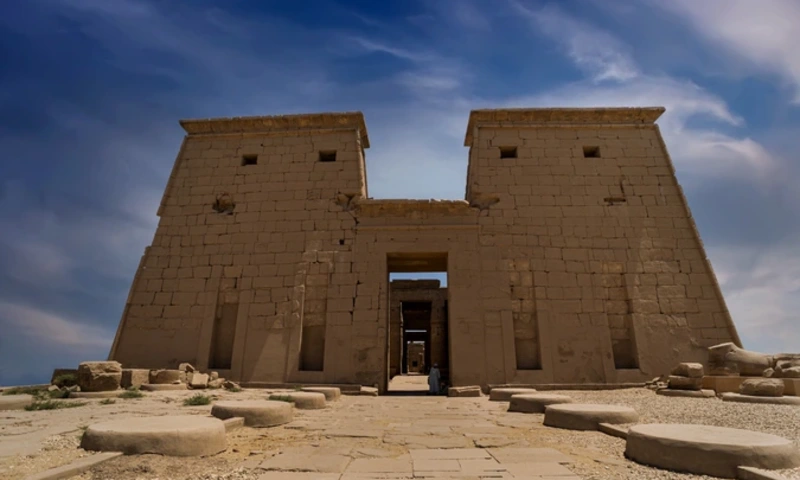
Walk around the village and take a look at the main street and foundations of houses. Then visit the decorated tombs that are open to the public (such as Sennedjem). Be sure to also visit the nearby Ptolemaic Temple of Hathor and Ma’at. The tombs that are open can vary so be sure to check what is open.
What to see nearby
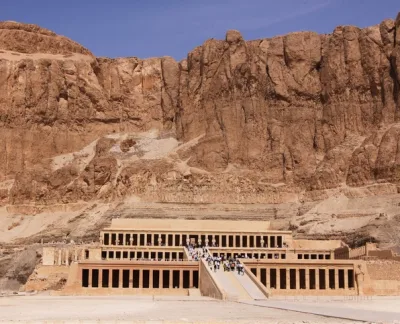
The Valley of the Kings, Valley of the Queens, Medinet Habu and Hatshepsut Temple can all be seen within a short drive. Use our guide to things to see in Luxor Egypt to plan your day.
Why visit Deir el Medina?
Whilst the royal tombs celebrate the Pharaohs, Deir el Medina shows you the people behind the tombs. This village of artisans has homes, letters and painted family tombs. This makes it feel much more personal and gives a great contrast to the larger monuments of Luxor. Spend a couple of hours here and you will understand the West Bank better.
Ready to see the temples and tombs of Luxor? Combine Cairo, Luxor and Aswan on our Egypt Tour with Nile Cruise.
FAQs
1- Where is Deir el Medina?
The site is located on the West Bank of Luxor, in the ancient Theban Necropolis.
2- Who lived in Deir el Medina?
The site was home to highly skilled artisans, artists, scribes and their families. Many of whom were employed to work on the tombs of the royalty in the surrounding valleys.
3- What is Deir el Medina famous for?
It is famous for being a workers’ village, with beautifully decorated tombs and detailed information about daily life.
4- What is the most famous tomb?
The Tomb of Sennedjem is one of the most famous. It contains brightly coloured, well-preserved wall paintings.
5- Is Deir el Medina open to tourists?
Yes! It is an archaeological site in Luxor. Whether specific tombs and monuments are available to visit will depend on visitor arrangements.