

Introduction
In November 1922, a British archaeologist peered through a small opening into a sealed chamber in Luxor and saw gold glittering back at him. Within months, the man who funded the search had passed away, and newspapers around the world began whispering about a pharaoh’s revenge.
Table of content:
- The Curse of Tutankhamun: Fact or Fiction?
- How Did the Discovery of Tutankhamun’s Tomb Spark the Mystery?
- Who Were the Alleged Victims of the King Tut Curse?
- Is There Any Scientific Evidence Behind the Curse of Tutankhamun?
- Why Does the King Tut Curse Still Fascinate the World?
- What Is the Truth Behind the Curse of Tutankhamun?
- FAQs
The Curse of Tutankhamun: Fact or Fiction?
In November 1922, a British archaeologist looked through a hole in a sealed chamber in Luxor and saw gold glittering back at him. The man who funded his search was dead within months, and newspapers around the world jumped on the opportunity, claiming the pharaoh’s revenge. More than a century later, the curse of Tutankhamun’s tomb is still one of the most popular tales in archeology. This guide will separate facts from legends and provide the locations to experience it yourself.
What Is the Curse of Tutankhamun?
According to one legend, the young king’s tomb was cursed because of various misfortunes befallen those who entered it. It provides the plot for countless adventure novels and films, but what is the truth behind the myth? Why did people believe that it was a curse that caused all these misfortunes to people close to the tomb? And what can modern tourists see for themselves at the excavation site? Our guide to King Tut’s tomb curse will answer these questions.
Where Did the Legend of the Pharaoh’s Curse Come From?
It is hard to say with a definite answer how exactly the legend of the mummy’s curse began. Some ancient texts mention curses – usually, they are prayers, in which the interred one invokes a terrible fate upon those who disturbed his peace. There are also inscriptions in the tombs of ancient Egyptian officials mentioning curses on intruders. However, the modern version of the myth is most likely an invention of the 1920s press. Mummies had already been a popular source of legends and Gothic literature since Victorian times, so it was only natural that the sensational discovery of the century would fuel the fantasy writers’ ambitions.
Why Was Tutankhamun’s Tomb Considered Cursed?
The problem was that Lord Carnarvon died only a few weeks after the tomb was opened. This gave ample fuel for newspapers to stoke the fires of sensation seekers. The truth of the matter is that Carnarvon’s death from an infected mosquito bite most likely had nothing to do with the tomb. Nevertheless, even if one amputates this event, there still would be enough gossip left to write a book. The legend began to spread actively – and the more people wrote about it, the more people believed. Our excursion through the Valley of the Kings introduces you to the place where the tomb was found, and our excursion through the Ancient Egyptian Pharaohs will tell you about the history of Egypt’s rulers.
How Did the Discovery of Tutankhamun’s Tomb Spark the Mystery?
The very discovery was indeed something out of the ordinary, and it has become famous due to its own dramatic presentation and fascinating story.
Who Discovered Tutankhamun’s Tomb in 1922?
Howard Carter, an English archaeologist, was the person behind the search for the tomb. The archaeologist was aided by his patron, George Herbert, the 5th Earl of Carnarvon, who helped him fund the excavations. In the Valley of the Kings, Carter and his men searched for months without finding anything of significance. Their perseverance paid off in November 1922 when they discovered a stairwell that had been sealed with royal stamps.
What Did Howard Carter Find Inside the Tomb?
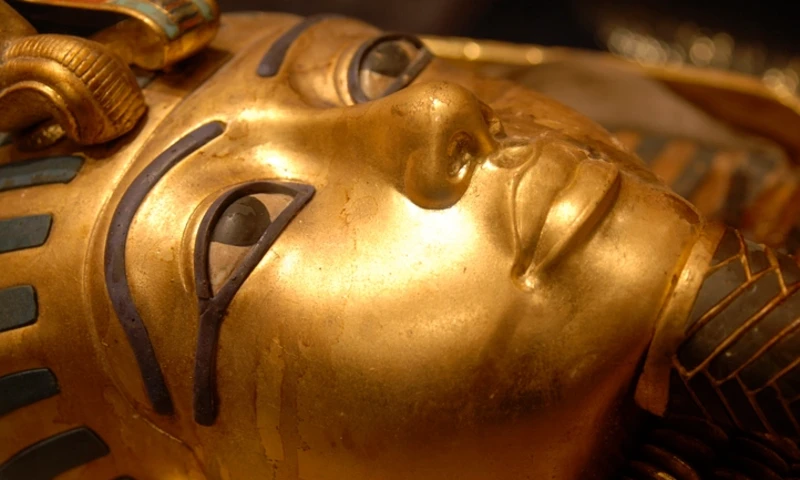
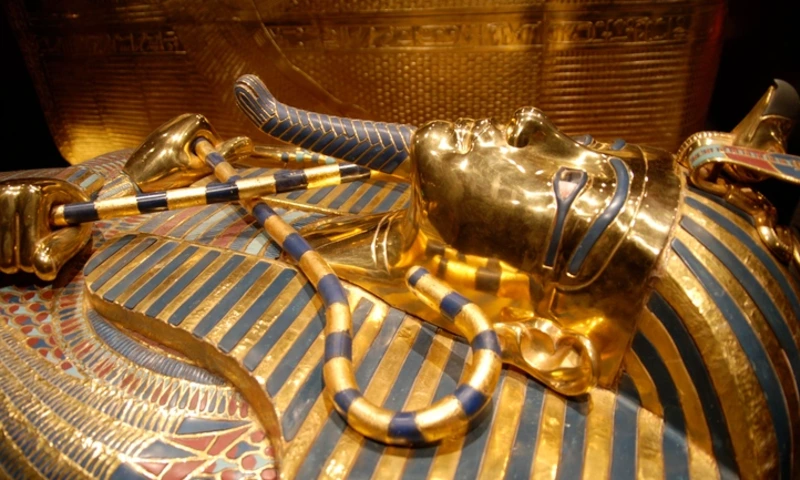
When Carter crawled into the chamber through a small opening and was asked if he saw anything, he declared, “Yes, wonderful things,” and, more importantly, he was not alone. Indeed, the tomb had an abundance of treasures. Specifically, Carter discovered more than 5,000 gold artifacts, including shrines, a chariot, various furniture, clothing, jewelry, and Gold Mask Tutankhamun . Most remarkably, the tomb was relatively untouched, making it one of the most intact ancient royal tombs ever discovered.
How Did the Media Turn the Discovery Into a Curse Story?
The 5th Earl of Carnarvon gave The Times an exclusive contract to report on the excavation, which prompted other newspapers to seek any available information. The discovery of the tomb became the news sensation of the year. Although Carter reported every detail carefully, a mysterious aura surrounded the find that captivated the public’s imagination. Journalists and novelists like Marie Corelli even claimed to have learned of the dangers that should be expected in such a place from ancient texts.
Who Were the Alleged Victims of the King Tut Curse?
As a story, the curse relies on a small cast of characters, so let's examine what happened to each.
What Happened to Lord Carnarvon After the Tomb was Opened?
Carnarvon died in Cairo on April 5, 1923, aged 56. The cause of death, according to official records, was blood poisoning caused by an infected insect bite while shaving, and pneumonia. In short, he had a run-of-the-mill feverish illness. However, it is worth noting that he had been in poor health for several years, having suffered an accident while riding a motorcycle, and hence spent his winters in Egypt. So, the poor weather was a contributing factor, but the reason was a common one.
Did Other People Connected to the Tomb Die Mysteriously?
Several people connected to the excavation have died a gruesome death, like the American multimillionaire George Jay Gould, who visited the excavation, then died of pneumonia in Cairo in late 1923. On the other hand, the legend only includes those who fit the narrative. In fact, apart from Carnarvon and Carter, almost all of the excavators survived, as did Carnarvon's daughter, Lady Evelyn Herbert, one of the first people to walk into the tomb, who died in 1980.
What Happened to Howard Carter?
Carter died in 1939, about sixteen years after Carnarvon, aged 64, of natural causes. Carter is considered the most likely to be affected by the curse because he had been inside the tomb for ten years before he died. If anything, Carter should have lived longer since he was a healthy and physically fit middle-aged man when the excavation began.
Is There Any Scientific Evidence Behind the Curse of Tutankhamun?
Researchers have examined the matter from several angles, and they have not found any evidence to support a supernatural explanation.
Could Ancient Tombs Be Contaminated with Harmful Bacteria or Fungi?
Ancient crypts have been known to produce such poisonous sprouts, and it is a legitimate concern for archaeologists. Still, the correlation between any microorganisms and the deaths and illnesses among Carnarvon’s people has yet to be confirmed, and Carnarvon’s condition was a common blood infection. Therefore, it is a theory but not a confirmed fact.
What Do Historical Records Say About the Alleged Deaths of People Entering the Tomb?
A study published in the British Medical Journal in 2002 attempted to compare the length of the lives of Westerners who had entered the tomb with the life expectancy of those who had not. The findings of the research showed that the two groups were similar in that regard. Overall, the records of people who had entered the tomb did not differ significantly from the typical death age in the area, which suggests that the curse might be nonexistent.
Was There an Inscription of the Cursing Words in the Tomb?
One of the most common allegations is that the tomb was inscribed with words that cursed anyone who would enter it. This statement is also false because no such inscription was found in the tomb; Egyptologists have found protective religious texts on the walls of the tomb and various artifacts. Moreover, the alleged curse phrasing appears to be a later addition to the legend, possibly invented by contemporary Egyptologists.
Why Does the King Tut Curse Still Fascinate the World?
Even without evidence, the legend of King Tut living on is hard to deny and easy to see why.
How Have Movies and Books Kept the Legend Alive
From classic horror films, to adventure movies and books, the mummy has been a favorite subject for decades, which means every generation gets introduced to the legend long before they ever meet the facts. The legend has been so popular and widespread that it has overshadowed the discovery itself.
What Makes Tutankhamun's Tomb So Extraordinary
The boy king Tutankhamun was pharaoh for about nine years and died at the age of 19, but the tomb that was found with him was in almost perfect condition having stood the test of time for more than three millennia. Such an amazing find has provided historians with a unique insight into the ancient Egyptian culture. More on that in our overview of Egyptian Museums.
Can Travelers Visit Tut's Tomb Today
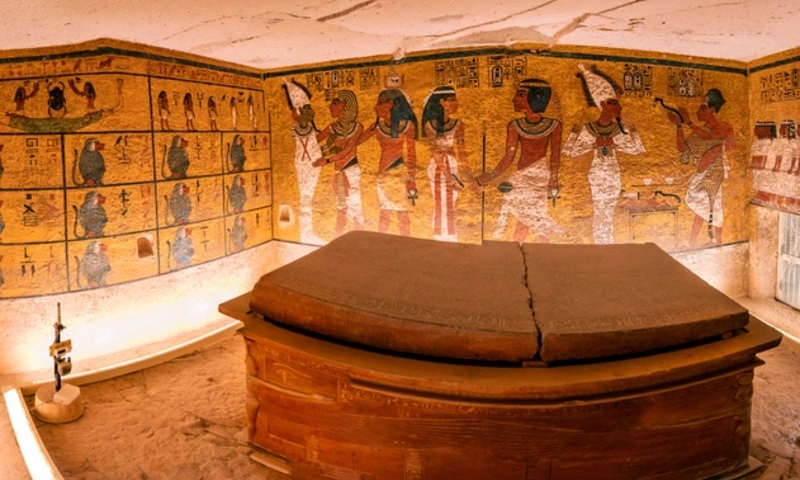
Yes, they can. The tomb of Tutankhamun catalogued as KV62 is open for visitors and is located in the Valley of the Kings in Luxor. Note that this tomb is smaller in scale than many others and is in fact quite modest. However, exploring the decorated burial chamber and studying the preserved mummy of the king under the glass dome are a great experience for any history buff. This is a must-see attraction that many of our travelers visiting Luxor choose to include in their itinerary alongside with our Luxor Town Guide that helps plan a full day tour on the West Bank of the Nile.
What Is the Truth Behind the Curse of Tutankhamun?
The documented facts are simple: an extraordinary tomb was unearthed in 1922, its primary backer died of an infection the following year, and the press did the rest. The curse of Tutankhamun has no foundation, and most people who survived the excavation went on to live reasonably long lives. Left behind is a legend that says as much about modern imaginations as it does about the ages of Egypt, and it continues to attract travelers to this day.
The best way to experience this history is to see it for yourself, from wandering the Valley of the Kings to viewing the treasures of the GEM Grand Egyptian Museum. Discover ancient Egypt through Trans Travel and learn more about their Egypt Travel Packages to plan your own adventure.
FAQs
1- Is the Curse of Tutankhamun Real?
There is no evidence to prove that any of the allegations which came up are true as all those involved died of natural causes and many lived long lives after the discovery.
2- Who Discovered Tutankhamun’s Tomb?
The tomb was discovered by an English Egyptologist, Howard Carter, in November 1922 with the financing provided by Lord Carnarvon in the Valley of the Kings.
3- How Did Lord Carnarvon Die?
Lord Carnarvon died of an infected mosquito bite which led to blood poisoning and pneumonia in Cairo in April 1923.
4- Did Howard Carter Die From the Curse?
Howard Carter died of natural causes in 1939 and lived for about sixteen years after the discovery of the tomb.
5- Was a Curse Written Inside Tutankhamun’s Tomb?
There is no evidence of any curse being inscribed on the tomb. The quotes attributed to the curse were artificially created and later added to the manuscripts.