


Introduction
Egyptian Sweets are a delight to eat and to experience the flavors of history. Fragrant with spices, nuts, and sweet syrups, these confections are staples of local markets and family celebrations and an entrée into the daily life of modern Egypt.
Table of content:
Why Egyptian Sweets Matter to the Travel Experience
Traditional Egyptian Sweets feature spices, nuts, and syrup that have been perfected over centuries of confectionery know-how. From street vendors to home kitchens, these treats are omnipresent in Egypt, often played a part in family traditions and religious holidays. Trying local sweets is a great way to get a glimpse of authentic culture, beyond famous landmarks. For foodie travelers who want to weave culinary exploration into their Egypt holiday, Egypt Travel Packages offer a range of options to plan a well-rounded experience. Our Cairo and Nile Cruise Package, for example, combines excursions in the capital with a boat ride down the River Nile.
This article presents 10 Traditional Egyptian Desserts with descriptions, key ingredients, occasions when they are traditionally eaten, and where to try them as a traveler in Egypt.
Syrup-Soaked Classics
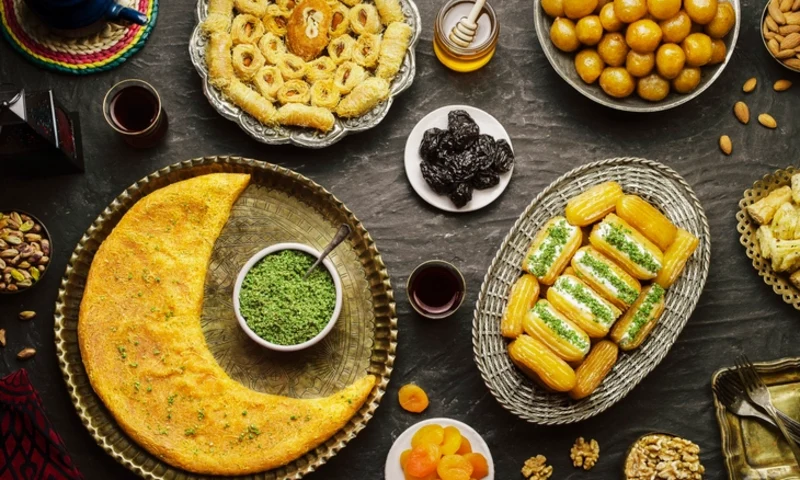
Many of Egypt’s best-known Egyptian Sweets have one thing in common: they are either baked or fried first, then bathed in sugar syrup.
Basbousa
This semolina cake is soaked in sugar syrup and often includes coconut and one almond or pistachio before being baked. Dense yet sweet, it is popular at festivals and family celebrations, but most bakeries have it year-round as a regular treat. It is rich, yet not heavy, being somewhere between a pudding and a cake, with its inner layers soaked in syrup after baking.
Kunafa
This is arguably the most popular sweet dish in Egypt and includes a thin pastry folded over a filling of sweet cheese, cream or nuts, which is then baked and bathed in syrup. It is especially popular during Ramadan, when whole streets are filled with different confectioneries, but it can be found throughout the year in a more humble appearance. Different shops specialize in different fillings, from cheese or cream to a mixture of different nuts.
Konafa Nabulsia
This dish is similar to Kunafa but uses a special kind of cheese typical of Levantine countries, and is less common in Egypt, where most people are used to the local varieties of cheese. It can sometimes be found in shops that specialize in Levantine-Egyptian desserts, usually in the capital.
Balah El Sham
These are sweetfried pastries similar to zalabya, but longer and narrower, often made using an egg. They are bathed in syrup, like many of Egypt’s sweet dishes, and are called “dates of Damascus”, probably due to their strong association with Syria and other Levantine countries, where they are also popular. But they have become a staple of both confectioneries and bakeries in Egypt.
Milk-Based Puddings
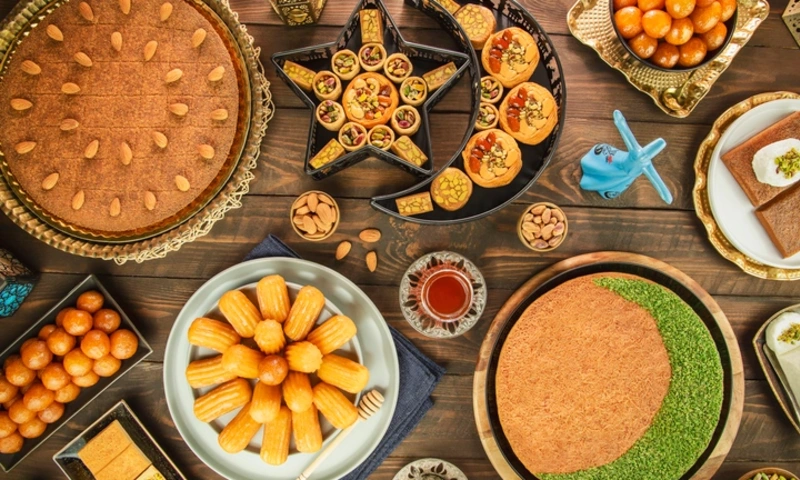
A lighter, less sweet category of Egyptian Sweets uses milk instead of syrup for its sweetening properties and may appeal more to less adventurous eaters looking for something less overwhelming than the deep-fried and baked staples.
Roz Bel Laban
Roz bel laban, Egyptian rice pudding, is a simple, satisfying dessert made of rice boiled with milk and sugar and often finished with cinnamon or chopped nuts. It is a lighter meal than many other Egyptian Sweets and often served chilled as a popular option for the hot summer months. It is frequently homemade but also appears on dessert menus at restaurants nationwide as a reliable alternative to other, heavier sweets on the menu.
Mehalabiya
Mehalabiya is a milky dessert made with cornstarch or rice flour as a thickener instead of rice boiled with the liquid, giving it a silkier, custard-like consistency than roz bel laban. Flavored with rosewater and often finished with crushed pistachios, it is typically served chilled as well and can be a nice counterpart to the heavier, syrup-based options mentioned previously.
Umm Ali
Umm Ali is a warm bread pudding made with layers of fluffy pastry, milk, sugar, and cream, mixed in with a variety of nuts and raisons and baked to a golden-crumpled finish. Named for a real-life Egyptian queen, Ali's mother, umm Ali is typically served warm and can be a popular winter dessert due to its heavier consistency, contrasting nicely with the cold month.
Street Food and Holiday Specialties
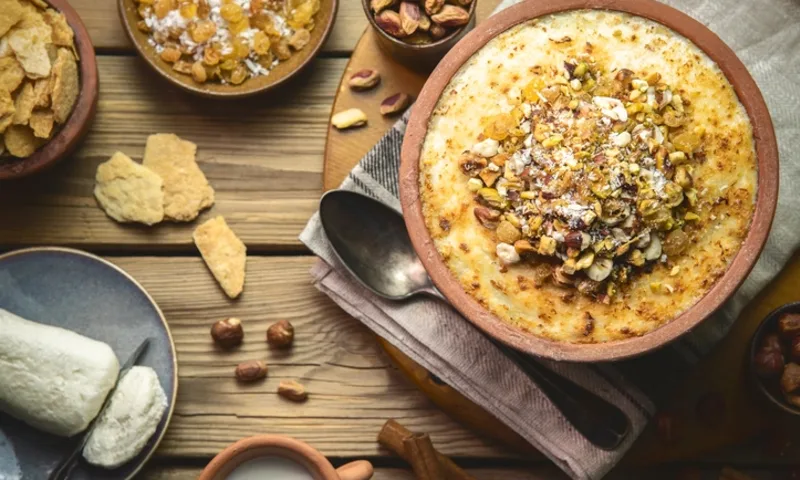
Some of Egyptian Sweets are enjoyed in a particular season or purchased fresh at street stalls and not on a regular bakery counter.
Zalabya
Zalabya are fried dough balls that turn out crispy on the outside and fluffy on the inside and are either doused in syrup or dusted with sugar. Fresh ones are available from street vendors, especially around religious holidays, where the scent of frying dough becomes an integral part of the shopping experience in any marketplace or residential neighborhood. Some are made with a light yeast-based dough, giving them a less dense texture than other fried dough delicacies in the region.
Qatayef
Qatayef is a folded pastry with a sweet filling of cheese, nuts, or cream that is either deep-fried or baked and then tossed in syrup. It is a dessert strongly associated with the Ramadan fasting month, only available in holy month dessert shops and rarely found outside of it. Street vendors also sell the folded dough for customers to prepare their own qatayef and fill their handmade pastries with their favorite mix of either dairy, nut, or cream.
Feteer Meshaltet with Honey or Sugar
Feteer meshaltet, usually a savory breakfast pastry, also comes in a sweet version with drizzled honey, sugar, or a mix of both and sometimes a layer of nuts on top. It is a lighter and fluffier version of the croissant, made in a traditional middle-eastern fashion with dozens of paper-thin layers of dough and butter. This breakfast favorite can often be found next to its savory counterparts in local bakeries.
Where to Try Egyptian Sweets on a Trip to Egypt
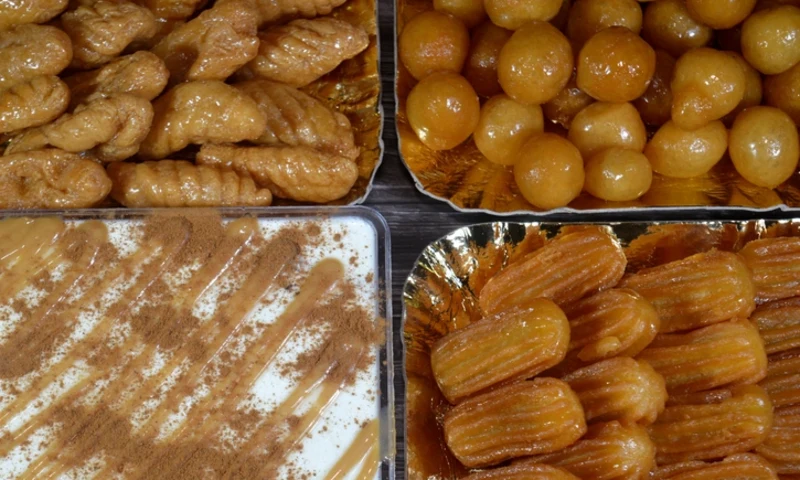
Cairo's older quarters are home to some of the country's most established pastry shops, many of which have been around in their current location for decades if not centuries in the shadow of markets such as Khan el-Khalili, where the scent of fresh kunafa and basbousa wafts out into the streets. Our Cairo City guide covers the capital's neighborhoods in more detail for those looking to find specific bakeries while visiting the region.
Further south in Aswan, the city's markets see their own variation of several similar desserts as found in Cairo, often using locally available ingredients and different spice mixes to create subtly distinctive flavors. Our Aswan City guide covers just that - the markets and day-to-day life for visitors looking to extend their trip up the Nile. For a general overview of the way that food and eating figure into sightseeing in Egypt, our Egypt Travel Guide and Things to Do in Egypt provide a more holistic approach, and the Egypt Vacation Package shows how a longer trip can include more food-focused experiences in tandem with the country's more traditional attractions.
FAQs
1- What is the most popular Egyptian dessert?
Kunafa and basbousa are probably the most common Egyptian Sweets, sold in any bakery in Egypt, and especially during Ramadan.
2- When is qatayef typically eaten?
The food is strongly associated with Ramadan, when it turns up on dessert tables, not that it's completely absent the rest of the year, but it's much more of a Ramadan special.
3- Are Egyptian desserts very sweet?
Most of the Traditional Egyptian Desserts are drenched in syrup, making them very sweet, but there are less sweet options such as roz bel laban and mehalabiya.
4- What's the difference between roz bel laban and mehalabiya?
Both are delicious pudding-like desserts, made from rice flour and milk, except roz bel laban is made using cooked rice while mehalabiya is thickened with cornstarch or rice flour.
5- Where can travelers find authentic Egyptian sweets?
In Downtown Cairo you can find traditional confectioneries that have been around for decades (if not hundreds of years) selling some of the best sweets. There are also local bakeries in places like Aswan that specialize in traditional desserts.