

Introduction
This Aswan Travel Guide is written with an emphasis on trip planning over anything else. The guide will focus on the general layout of the city, the main attractions, the ways of getting in and getting around, and how to fit a stop in Aswan into an overall Upper Egypt tour.
Table of content:
What Aswan City Is and Why Travelers Visit
Aswan City is a city in southern Egypt on the banks of the Nile River, located between granite mountains and where the river narrows between two rocky promontories called the first cataract of the Nile. Aswan is quieter than Cairo and more sparsely populated than Luxor. However, Aswan is also much more laid-back than other tourist destinations in Egypt. The city is famous for its feluccas, villages, and Nubian people, as well as ancient Egyptian temples. The temples are perched on islands and along the desert’s edge rather than clustered together in one city center. Many visitors stop in Aswan as the southernmost point on their Egypt tour, either after taking a felucca cruise from Luxor or going to see the ancient ruins of Abu Simbel.
The Aswan Travel Guide is intended to help you plan your own visit to this ancient Egyptian city rather than push any particular tour or vacation package. The first section describes the city, its key sights, and how to get around town. Following that, the article provides practical advice on visiting Aswan as part of a larger tour of Egypt. For travelers planning the wider region, browsing available Egypt Nile Cruises is a practical way to see how Aswan connects with Luxor and the temples along the river.
Getting Oriented: The Nile, the Islands, and Nubia
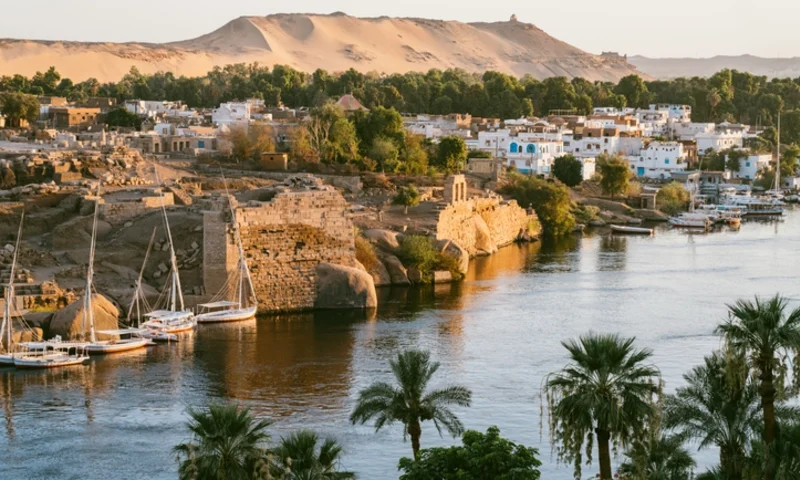
Aswan's charm is created by its geography. The Nile is marked by islands and granite boulders, which make this section of the river more flowery and less flat than farther north. Elephantine Island in the middle of the Nile, just opposite the city center, includes Nubian villages and the excavated remains of ancient Yebu. Kitchener's Island, a short boat ride away, has a botanical garden containing plants from around the world.
The culture of the Nubian people is intertwined with that of Aswan. A number of Nubian families moved to Aswan after their villages farther south were flooded by the construction of the Aswan High Dam, and colorful Nubian-style dwellings different from those in the rest of Egypt are a frequent sight on Elephantine Island and in the villages accessible by boat. A felucca ride, Aswan's traditional wooden boat, is the best way to view Nubian culture, usually available in the late afternoon when the sky turns coppery.
Philae Temple and the High Dam
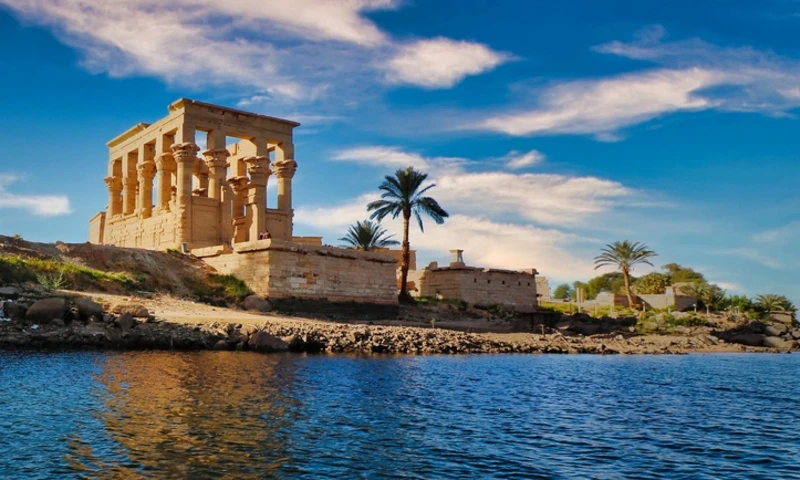
The Philae Temple, dedicated to goddess Isis and one of the most popular attractions in Aswan, is located on an island accessible via a short motorboat ride. The temple – rebuilt stone by stone in a huge enterprise in the 1960s and ’70s – had to be moved to this new location, as its ancient home was underwater: the rising waters of the newly built Aswan High Dam threatened to submerge it. A visit to Philae usually takes two or three hours, including the time needed for the boat transfer, with sound-and-light shows available in the evenings.
Aswan High Dam, an engineering feat that transformed the local landscape and the way of life of thousands of people, is another notable object of interest in Aswan. However, the dam is somewhat of an anti-climax for many, as, despite its unrivaled significance, it does not present much aesthetic appeal and is best admired from a distance, perhaps with a short look at the dam construction details. Noteworthy, the high dam was built on the southern border of the city, so getting there is relatively quick and easy. The dam created a vast artificial lake – the Nasser Lake – and, as a consequence, the ancient Nubian villages had to be relocated further south.
Abu Simbel: A Day Trip from Aswan
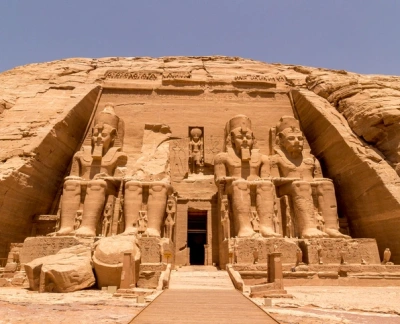
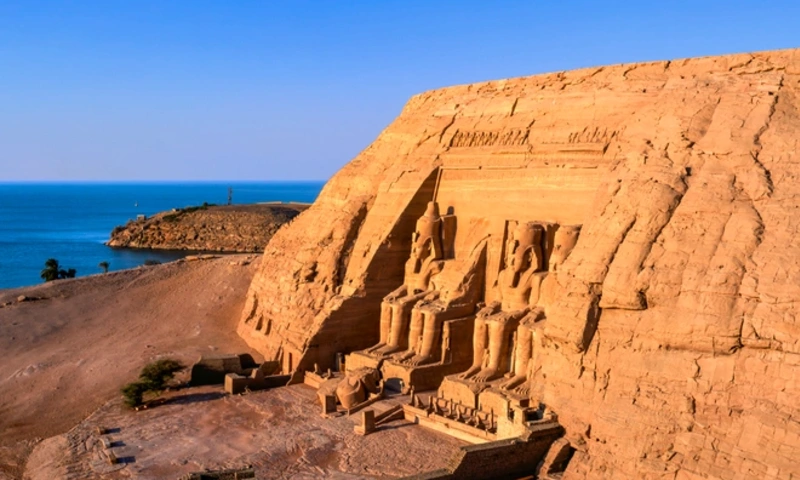
Abu Simbel Temples built by Ramses II is located about three hours from Aswan by road near the Sudanese border. In the twentieth century, this and the Philae temple were relocated from their original sites to higher ground to avoid being submerged in water from the rising Lake Nasser and were both painstakingly reconstructed. Most people take a day trip visiting Abu Simbel from Aswan leaving early in the morning so as to reach before the heat of the day sets in and to be able to return the same day. A few people take a flight to Abu Simbel as it cuts out most of the travel time for those on a tighter schedule.
Edfu and Kom Ombo: Temples Between Aswan and Luxor
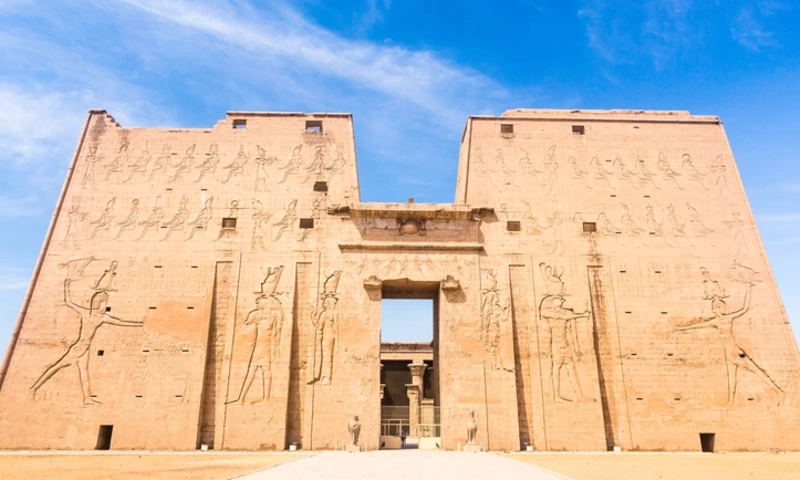
There are two ancient temples that lie on the route between Aswan and Luxor and are the most popular tourist attractions along the way. Kom Ombo and Edfu Temples are the nearest of the two ancient temples to Aswan, and it is considered unique because it is a double temple, being dedicated to two different gods. The temple was constructed under the dedication of Sobek, the crocodile god, and Horus the falcon god. Further north is the temple complex at Edfu, which is one of the best-preserved ancient Egyptian temples because it was buried under sand for a long period of time until its discovery in the 1860s. Both temples are usually included as a brief detour for visitors on a cruise along the Nile River or as separate attractions during the road transfer from one city to another.
Getting There and Getting Around
Aswan International Airport has links to Cairo and Luxor via short domestic flights, and there are overnight trains from Cairo too. Most visitors arrive by boat, rather than by bus or plane, as part of an Egypt Nile Cruises that begins or ends at Aswan after a journey from Luxor.
Taxis and hotel transfers provide the main forms of transport within the city, with feluccas and pirogues making the crossings to Elephantine Island, Kitchener's Island and Philae Temple. Alternatively, for those putting together their own Egypt Tour with Nile Cruise, rather than booking a cruise, it is possible to include Aswan as a stop on the way between Luxor and Cairo, without having to make any complex arrangements. For further reading on planning a visit around Aswan, see our guides on things to do in Aswan
FAQs
1- How many days do you need in Aswan?
A two-day tour of Philae Temple, a felucca boat ride, and a Nubian village visit, with an optional day trip to Abu Simbel.
2- Is Abu Simbel worth the day trip from Aswan?
Most travelers agree that the twin temples are worth the nearly 3-hour drive each way; also, note that there are flight options for speeding up your travel time.
3- What is the best way to see Philae Temple?
The temple complex is a short motorboat ride from the city and is set on an island you can tour in two hours or so, with an optional evening sound-and-light show.
4- Can Aswan be combined with Luxor in one trip?
Yes, as the two cities are often combined on a trip up the Nile or by road, with stops at Kom Ombo and Edfu temples en route.
5- Why does Aswan have a strong Nubian influence?
This is because a number of Nubian tribes resettled in this area after their ancient villages were flooded by the creation of the Aswan High Dam.