

Introduction
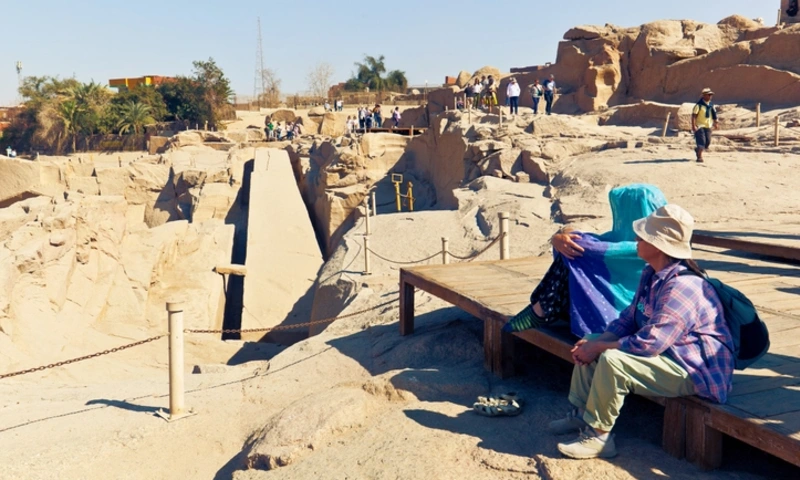
The Unfinished Obelisk sits exactly where ancient workers left it thousands of years ago, still attached to the bedrock in a granite quarry on the edge of Aswan. Aswan Obelisk, Nowhere else in Egypt offers such a direct, physical record of how obelisks were actually carved, since every finished obelisk elsewhere has been cut free, polished, and transported, erasing the evidence of the process itself.
Table of content:
Why Is the Unfinished Obelisk So Important?
The Unfinished Obelisk remains perfectly placed just as it was thousands of years ago, where it was left when excavators first started digging at the edge of Aswan. Nowhere else in Egypt can you see this level of detail on an obelisk still attached to the bedrock in its original granite quarry. Every other obelisk in Egypt has been excavated, polished, and transported out of its quarry, so the Unfinished Obelisk gives us the closest look at how these structures were actually carved. If you're looking to bring an additional historical experience to your Upper Egypt tours, Egypt Travel Packages demonstrate how you can include a stop at this fascinating site in a day's itinerary.
Where Is the Unfinished Obelisk Located?
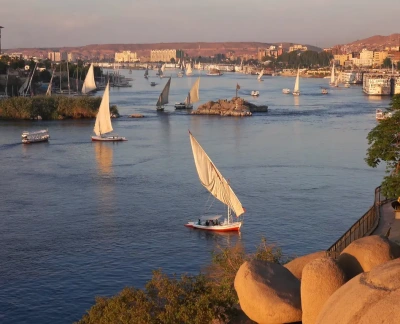
The Unfinished Obelisk is located in the northern quarries of Aswan, only a short drive from downtown, and within a day's travel of the other major sights you'll likely be exploring in Aswan. Egypt Nile Cruises frequently include Aswan as a stop, meaning that if you arrive in town on a boat, you can easily explore the quarry and other important Aswan sights in a single day, and our Aswan City guide can help you understand the region the Unfinished Obelisk is found in.
How Big Is the Unfinished Obelisk?
If finished, the Unfinished Obelisk would have been the tallest obelisk ever built in Ancient Egypt, standing at 42 meters and weighing 1,200 tons, almost a third larger than any of the successfully finished obelisks in the country.
Who Built the Unfinished Obelisk?
Tradition attributes the project to Queen Hatshepsut, one of Egypt’s few female pharaohs, who may have decided to create it as a companion to obelisks she had already raised at Karnak Temple.
When Was the Aswan Obelisk Created?
Work dates from the 18th Dynasty, during Hatshepsut’s reign in the fifteenth century BC, a period when Egypt’s largest standing obelisks were created using the same Aswan quarries.
Why Was the Obelisk Never Completed?
A crack in the granite midway up the progress of carving it out ran through the body of the stone, making the stone unusable for its intended purpose. To avoid the risk of the obelisk breaking during the difficult process of separating and transporting it, the work was simply abandoned at the spot where the crack was found.
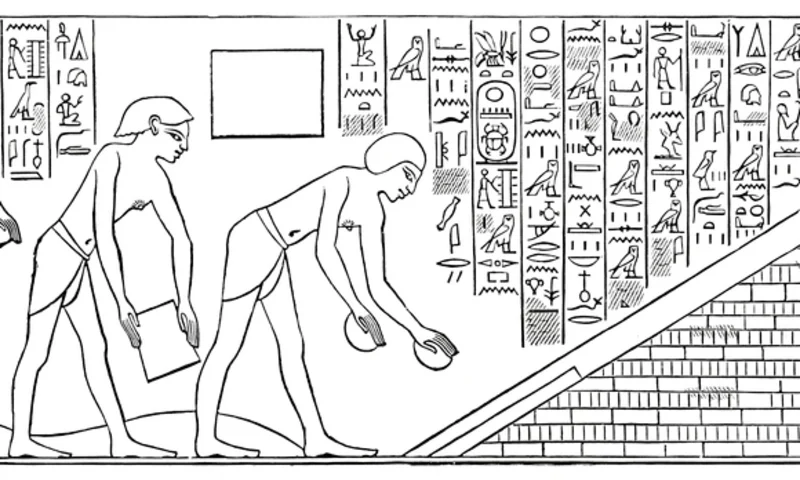
How Did Ancient Egyptians Build Obelisks?
Carving monoliths like obelisks consisted, first, of defining their shape (or maybe shapes) in the bedrock, then proceeding to work down on it from above and around, using stone pounders, and later in the process, other tools better suited to the task, over a period of time (months or even years) to get a finished product.
Why might the builders of the obelisks have chosen Aswan granite?
It was strong and hard, which made it valuable for monuments that had to withstand the test of time, but at the same time, proved to be much more challenging to carve than softer stones. The local granite was used to make obelisks and other monuments, the blocks of which were then taken northward up the Nile.
What do the quarry marks and scoops suggest about the methods used?
The scoop marks indicate that the easiest way to remove the stone was to pound it. They can also provide researchers with a detailed look at ancient mining methods, normally invisible, by interpreting the marks.
What Can You See at the Unfinished Obelisk Today?
The visitors can see the obelisk from close proximity, as it is still partially embedded in the quarry’s rock, enabling them to examine the crack, which stopped the construction, and the tools’ traces on the monolith.
What Other Discoveries Can Be Made in This Quarry?
The other discoveries include the scoop marks, partially excavated stone, and the leftover smaller blocks, which provide the context to understand how the laborers mined the materials for the constructions of large-scale projects.
What Can We Learn About the Ancient Egyptian Engineering from This Site?
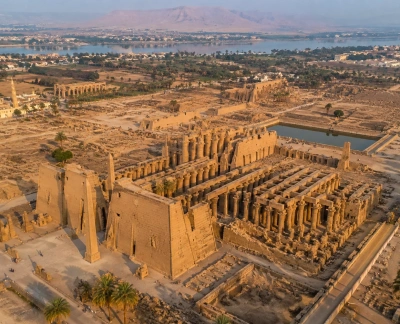
The engineering capabilities of the ancient Egyptians can be better understood within the context of the effort needed to build such a large construction and the resources that had to be allocated to complete the task. Compared to the obelisks uncovered or constructed within the modern cities of Egypt, the one in Karnak appeared to have been accomplished due to the massive efforts of the labor force.
Why Should You Visit the Unfinished Obelisk in Aswan?
For travelers with a specific interest in ancient engineering or archaeology, this site has the distinct advantage of revealing an unfinished, in-progress look at a process only usually seen in completed form.
What Other Attractions Can You Combine With Your Visit?
The quarry is close enough to Aswan's other main sites that it can easily be combined with them in one day. Philae Temple, with its own short motorboat transfer, pairs well with a visit to the quarry, while our guide to Things to Do in Aswan Egypt includes other options for combining a trip to the obelisk with your Aswan stay.
How Can You Include the Unfinished Obelisk in Your Egypt Trip?
A visit to the Unfinished Obelisk fits naturally into a wider Aswan stay, whether arriving independently or as part of a longer river journey. Our Egypt Nile Cruise Package covers the route between Luxor and Aswan in detail, a common way to combine the quarry with the region's temples in a single itinerary. For a broader sense of how Aswan fits into the rest of the country, our Egypt Travel Guide covers Egypt's main regions together.
FAQs
1- Why is the Unfinished Obelisk still in the quarry?
A crack formed in the granite during carving, and the workmen abandoned the project before the obelisk could be removed from the quarry.
2- How big would the Unfinished Obelisk have been if completed?
It would have been 42 meters high and weighed 1,200 tons, making it the largest obelisk that was ever attempted.
3- Who commissioned the Aswan Obelisk?
This ancient artifact has been attributed to Queen Hatshepsut, who is believed to have commissioned it during the 18th Dynasty as a mating piece to the obelisks she had built at Karnak Temple.
4- What are the scoop marks at the Unfinished Obelisk site?
Scoop marks are what the ancient workmen left behind after using the pounding technique to remove a lot of stone from the unfinished obelisk.
5- Can the Unfinished Obelisk be combined with other Aswan attractions?
The Unfinished Obelisk is a good distance from the Philae Temple but close enough to the other Aswan attractions to make a combined tour possible on a single day.