Introduction
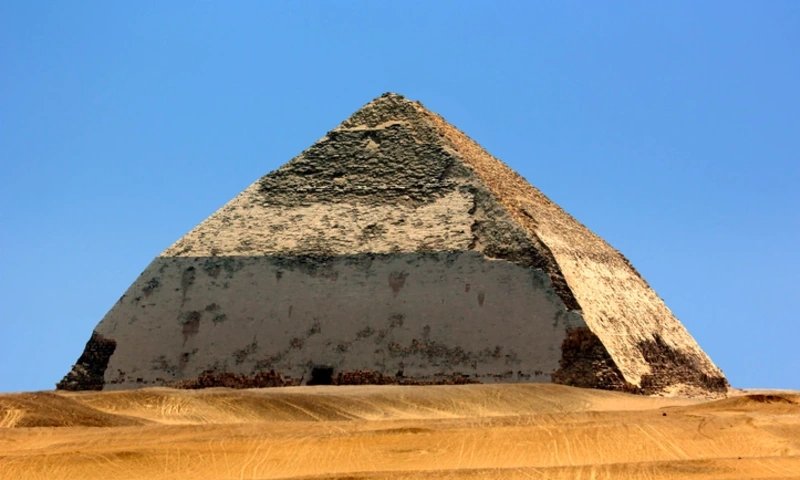
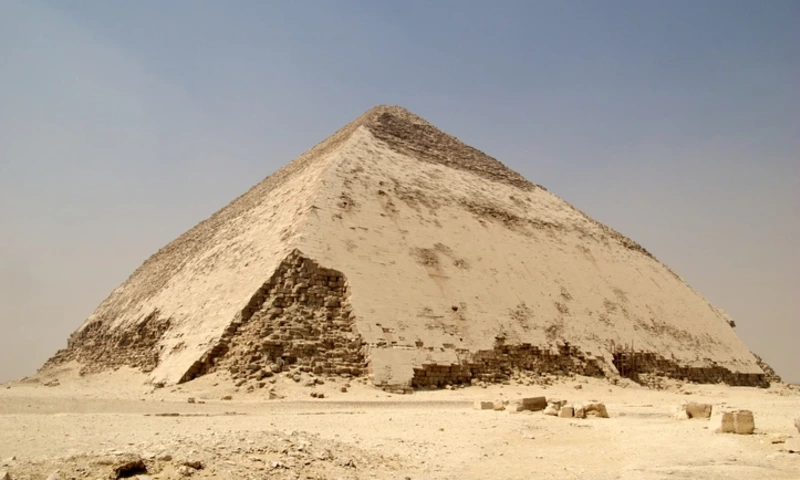
Not all the pyramids in Ancient Egypt are the classic straight sided design like those in Giza. The unusual design of this pyramid found in Dahshur desert area south of Cairo tells us an important story. It has a steeply sloping base but then changes angle halfway up to create one of the most identifiable designs in Ancient Egypt.
This pyramid was built during the reign of Pharaoh Sneferu and shows how the pyramids were evolving from step pyramids to the smooth sided pyramids we know Egypt for. This pyramid is not only unusual looking but also gives us insight into the challenges faced, methods used and ambitions of the Fourth Dynasty.
The bent pyramid at dahshur is an attraction for travellers wanting to explore more of Egypt. It provides an interesting insight into how Egyptians improved their techniques to create the Great Pyramid of Giza. From the impressive outside to the complicated passageways inside.
Table of content:
What Makes the Bent Pyramid Unique in Ancient Egypt?
The Bent Pyramid is unique to other Egyptian pyramids due to the visible change in angle from the bottom to the top. This makes it one of the most important surviving examples of an experimental pyramid in ancient Egypt.
Where is the Bent Pyramid?
The Bent Pyramid can be found in Dahshur, a large archaeological site roughly 40km south of central Cairo. Dahshur is part of the Memphite necropolis which contains several pyramids and burial complexes.
As opposed to the busy setting of the Giza Plateau, the site is located in a peaceful area of the desert and allows visitors to understand the scale and design of the ancient buildings. The Bent Pyramid is located close to the Red Pyramid.
There are other pyramids and remnants of ancient burial complexes within the site showing the development of ancient Egyptian royal architecture over several generations. This also shows how Dahshur became an important place for pyramid construction.
Who built the Bent Pyramid?
The Bent Pyramid was built by Sneferu, the first ruler of Egypt’s Fourth Dynasty. Sneferu was the father of Khufu who would later build the Great Pyramid of Giza. The pyramid was built around the 26 th Century BCE.
Sneferu’s reign was a very important time for pyramid construction as he was associated with several large pyramids such as the Meidum Pyramid and Red Pyramid. Sneferu's ambitious building projects marked an important chapter in the history of Egypt's royal dynasties. Discover more about the rulers who shaped ancient Egyptian civilization in our guide to Ancient Egyptian Pharaos
Careful planning and skilled workers were needed to build these huge structures. Thousands of limestone blocks would have had to be quarried, transported and placed to create a pyramid strong enough to hold its weight. Overall, the Bent Pyramid demonstrates the ambition of Sneferu’s building programme and the determination of Egyptian architects to create increasingly complex royal tombs.
Why is the Bent Pyramid unique?
The most unique feature of the pyramid is the double angle of the structure. The bottom half of the pyramid rises to around 54 degrees and the top half continues at a shallower angle of around 43 degrees.
This creates the distinctive bend which means the pyramid has gained its name. Most Egyptian pyramids after this have a more consistent slope from the base to the top.
Another amazing feature of the pyramid is that there are still large sections of the original smooth limestone casing remaining. Many Egyptian pyramids lost much of their exterior but the Bent Pyramid is still very valuable.
This makes it extremely useful in understanding how the ancient Egyptians built their structures and what the royal pyramids looked like during the Old Kingdom.
Why Was the Bent Pyramid Built with Two Different Angles?
The unique shape of the Bent Pyramid has captivated archaeologists and architectural historians for many years. Although there is ongoing debate around why this pyramid was designed differently, it provides important information about how the ancient Egyptians dealt with engineering issues.
Why Did Ancient Egyptian Builders Change The Angle Of The Pyramid?
The most popular reason for the change is that the builders wanted to make the pyramid more stable. The steep slope of the original pyramid put a lot of pressure on the structure. As the pyramid was being built the engineers may have realised that by keeping the angle the same there would be a higher risk of structural issues. By decreasing the slope they would have reduced the amount of stone needed to build the top part of the pyramid and the pressure on the bottom layers.
Although there is some debate over exactly what happened, there may have been a number of factors involved in deciding to change the angle. This could have included gaining more knowledge about building, structural issues and developing better ways of building pyramids. These architectural developments eventually contributed to the construction of the Pyramids of Giza, where Egyptian builders achieved an extraordinary level of precision and monumental scale.
Historians know this pyramid was an important part of the development of Egyptian engineering. To understand the earlier stages of pyramid construction, explore the Step Pyramid of Djoser at Saqqara, an important predecessor to the smooth-sided pyramids built during Sneferu's reign.
Engineering Issues Faced
Building a large pyramid required excellent planning. The builders had to build a strong base, organise how they would move the building materials and ensure that each layer would be able to support the weight above. Small mistakes in the pyramid could cause issues as the building got larger.
The bent pyramid at dahshur has a complex network of internal rooms and corridors. These had to be incorporated into the stone structure. There is evidence that the builders were improving their techniques by making changes to the structure. This helped develop Egyptian pyramid building techniques. Travelers planning a day trip to Dahshur can explore our Cairo City guide for additional information about the Egyptian capital and its surrounding attractions.
Influence On Future Pyramids
Due to the learning from Sneferu’s building projects, techniques were developed that were used on future pyramids for royalty. The Red Pyramid, built during Sneferu’s reign has a more consistent and gentle slope. This is seen as a huge step towards successfully building smooth sided pyramids. The knowledge gained from building at Dahshur would have influenced future projects including those built by Sneferu’s successors.
The Great Pyramid of Khufu at Giza is a later example of this. While it is very different in size and layout, it was built during the same time of fast development. Understanding the Bent Pyramid helps us understand how the Egyptians developed from experimenting to build some of the most ambitious stone structures in human history. For a broader journey through Egypt's ancient monuments and cultural landmarks, explore our Egypt Travel Guide to discover more destinations worth including in your itinerary.
What Can You Discover Inside the Bent Pyramid?
The interior of the pyramid is also very interesting to look at. The corridors, chambers and entrances do not match many other pyramids of royalty.
What Is Inside The Bent Pyramid?
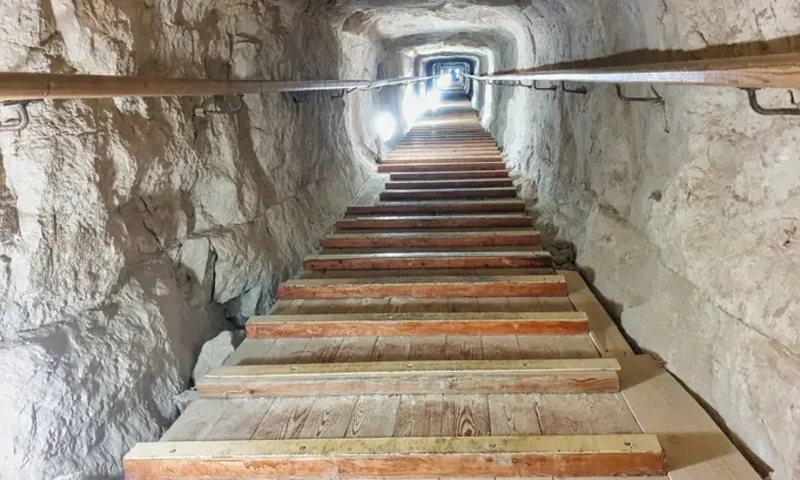
The interior consists of a series of descending corridors and chambers. One of the most unusual features is that there are two entrances, one on the north side, and one on the west side. These entrances lead into different areas of the pyramid. Inside the pyramid are chambers with corbelling. This is done by using layers of stone that are slightly inset, allowing a large, sloping area that can distribute weight.
This shows how advanced the ancient Egyptians were with their stone building techniques. The chambers show how much experimentation was happening during the time of Sneferu. Whilst the pyramid was built as part of the royal mortuary complex, there is no conclusive evidence from inside the pyramid that Sneferu was buried here.
Can You Enter The Bent Pyramid?
The bent pyramid opened to the public in 2019. Restrictions may be put in place due to conservation efforts, maintenance or archaeological work meaning that things can change. It is best to check if you can enter.
To get inside you will have to walk down tight sloping corridors. Some areas of the pyramid require you to crouch or be careful.
Inside the chambers are very interesting. They give travellers a good insight into how the ancient Egyptians built their structures. You can see the raw stone, unique corridors and corbelling which really gives you an insight into the architecture. If you are not comfortable in small spaces or have any mobility issues then you may wish to consider.
Unique Features Of The Interior Architecture
The Bent Pyramid has two main systems inside it unlike many other pyramids. This has led to much debate about how it was built and what it was intended to be used for in terms of burials. The corbelling in the chambers is amazing. It shows how the ancient Egyptians created large spaces inside the pyramid.
The pyramid also has evidence of different methods of building, making it a valuable site for researchers. For those interested in archaeology, seeing these features will give you a greater understanding of the difficulties faced when building Egypt’s first smooth sided pyramids.
How Does the Bent Pyramid Compare with the Red Pyramid?
Dahshur is very important as there are two large pyramids from Sneferu’s reign. This helps us to see how the Egyptian architects improved their techniques to get closer to the pyramid we know today.
What Is The Difference Between The Bent And Red Pyramids?
The Bent Pyramid has two different angles which create the distinctive curved shape. Whereas the Red Pyramid has a constant angle of around 43 degrees.
The Red Pyramid is considered to be Egypt’s first successful true smooth sided pyramid. It gets its name from the red colour of the limestone used in the core. However, the pyramid would have originally had a white casing.
This shows an important time in the development of the architecture during the Fourth Dynasty.
Why Is The Red Pyramid Important In Egyptian History?
The Red Pyramid is an impressive feat of engineering. The consistent angle and large scale shows how confident the architects were becoming having learned from previous projects.
It was built after the Bent Pyramid and is considered to be the final success of Sneferu’s smooth sided pyramid experiments. The layout inside this pyramid differs to the Bent Pyramid.
The construction of this pyramid helped to develop techniques which would be used in future royal pyramids.
What Other Ancient Monuments Can Be Found At Dahshur?
There are more royal tombs to explore at Dahshur. There is the Black Pyramid of Amenemhat III and more buildings from other Middle Kingdom rulers. The site is part of the UNESCO World Heritage Site of Memphis and its Necropolis. There are many important pyramid fields from Giza to Dahshur.
You can really appreciate how the pyramids developed throughout different time periods. The monuments are all very different in terms of design, condition and ambition. If you are interested in ancient history, this area will give you a better understanding of how pyramids were built.
How Can You Visit the Bent Pyramid at Dahshur?
A visit to Dahshur is a great way to explore an important archaeological site. If you can plan your transport, know the layout and give yourself enough time then you will have a great experience.
How to get to the Bent Pyramid from Cairo
The bent pyramid located in the archaeological site of Dahshur is situated south of Cairo. Most people will travel towards the southern edge of Cairo and then into the surrounding farmland. Most people will travel to Dahshur by taxi, car or organised transport. Public transport can be tricky.
As the archaeological sites are spread out, having good transport will make exploring the different monuments a lot easier. Dahshur can be combined with Saqqara and Memphis however you will need to plan well to visit multiple archaeological sites in one day.
What to know before visiting the Pyramid
Wear comfortable shoes to walk around the site. There are a lot of sandy, stony and uneven surfaces.
If you want to go inside the pyramid be prepared for tight corridors, steep tunnels and confined rooms. The inside is quite different to the outside so be aware of what you need to do physically.
There may be some changes to the photography rules and how you can enter certain areas. Especially inside ancient monuments. Following the guidelines will help preserve the archaeological sites. Take your time to walk around the outside. You will get a better view of the unique slope change and amazing preservation of the original casing.
Best Things to See Near the Bent Pyramid
The obvious choice would be the Red Pyramid. This is a great place to compare two key points in the evolution of Egyptian pyramids.
Saqqara is further north. This is home to the famous Step Pyramid of Djoser. This is an early example of a large monument. The ancient site of Memphis has many important archaeological remains.
These three places show how the Memphis region became an important part in the development of royal monuments in Ancient Egypt.
Why is the Bent Pyramid Important in Egyptian History?
The Bent Pyramid is not just an unusual structure in the Egyptian desert. It shows how architects were trying new ways to build and developing their engineering knowledge to create more ambitious pyramids for the Kings. This unique structure, with its preserved limestone casing and complicated chambers, makes it one of the most valuable monuments to understand how pyramids evolved.
A visit to Dahshur gives you a different insight into Ancient Egypt and shows how amazing the achievements were before the more famous pyramids of Giza. For anyone who loves Egyptian history, the Bent Pyramid is an amazing example of human genius, architectural experimentation and the lasting legacy of the Old Kingdom.
FAQs
1. Why is it called the Bent Pyramid?
The angle of inclination was decreased during construction, likely to improve stability.
2. Who built the Bent Pyramid?
It was commissioned by Pharaoh Sneferu in the Fourth Dynasty of Egypt around 26th Century BCE.
3. Where is the Bent Pyramid?
It is located at Dahshur around 40km south of central Cairo, Egypt.
4. Can you enter the Bent Pyramid?
Since it was reopened in 2019 you have been able to enter the inside of the pyramid. However, it is best to check if you can still enter.
5. What is the difference between the Bent Pyramid and the Red Pyramid?
The Bent Pyramid has two different angles of inclination. The Red Pyramid has one consistent angle of inclination and is considered to be the first true smooth sided pyramid to be successfully completed in Egypt.