

Introduction
The Nubian Village is a colloquial name for several communities of people living on the banks of the Nile near Aswan, the most famous of which is Gharb Soheil on the western bank of the river, where the local culture is preserved in many details in people’s daily lives, not being enclosed in a museum framework. Unlike similar communities living in Egypt, Nubians differ inethnicity, unique architecture of their houses, and cultural traditions. Nubians are descendants of the ancient Nubian kingdom that existed many centuries ago on the territory of modern Egypt and Sudan. The community was widely spread along the banks of the Nile and part of it was moved to the new village when the Aswan High Dam was built, and Lake Nasser was formed.
Table of content:
- What the Nubian Village Is and Why Travelers Visit
- Getting Oriented: Gharb Soheil and the Nile Journey from Aswan
- Nubian Houses and Architecture
- Nubian Culture, Traditions, and Language
- Food and Crafts
- Combining a Nubian Village Visit with Aswan's Other Sites
- Getting There and the Best Time to Visit
- FAQs
What the Nubian Village Is and Why Travelers Visit
The Nubian Village is a complex of villages located along the Nile near Aswan, whose most prominent village is Gharb Soheil on the west bank of the river, representing the rich Nubian Culture that persists among the locals as opposed to being displayed only in a museum. Being different from other Egyptians in terms of language, architecture, and traditions, the residents of Nubian villages regard themselves and are perceived by others as the descendants of the ancient civilization of Nubia, which was located in Southern Egypt and extends into modern Sudan. Many villagers are actually descendants of those people who had left their village after creating a new lake due to the building of the Aswan High Dam. This short essay aims to integrate a visit to this unique area within a broader context of exploring the Aswan region, and the guide to the Aswan city can be used as a reference for other points of interest in the vicinities of the Nubian Village.
The current guide includes information on the Nubian Village as a separate destination, which can be explored within a day trip from Aswan. Particular attention is paid to the local architectural details and the cultural heritage of the villagers, including the cuisine and crafts. Besides, practical information is provided on the ways to reach the village and the opportunities to prolong the visit to the Nubian Village within a larger touring program in the Aswan region. For travelers wanting to fold a Nubian Village visit into a longer trip, Egypt Travel Packages show how a stop like this typically fits alongside Aswan's other major sites.
Getting Oriented: Gharb Soheil and the Nile Journey from Aswan
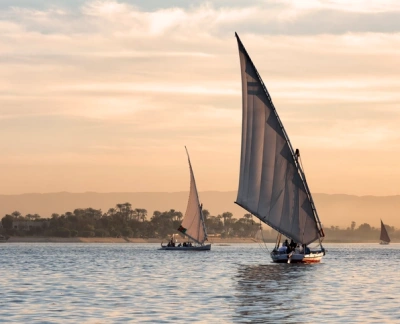
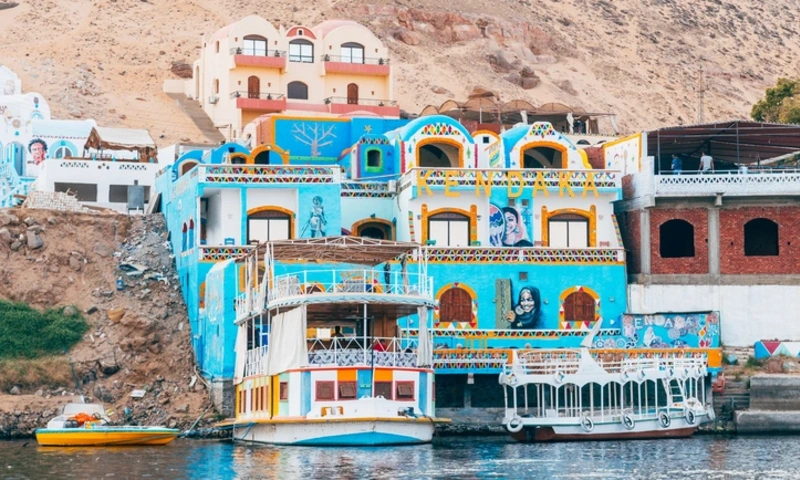
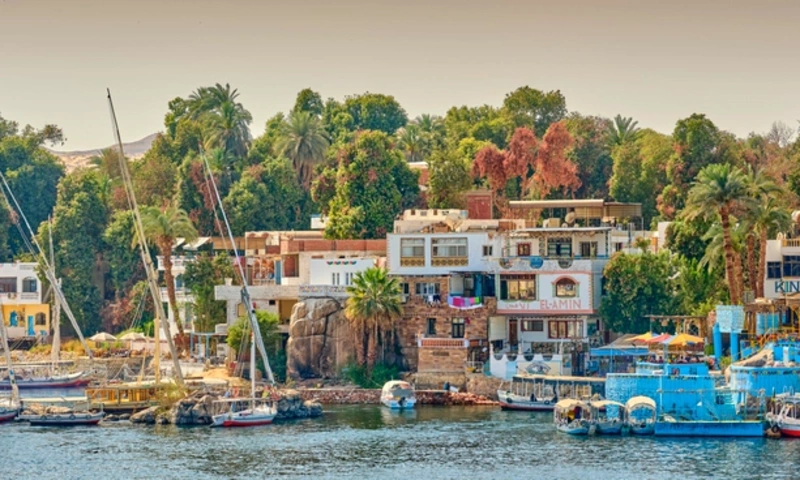
Gharb Soheil is located on the west bank of the Nile, a short boat trip from central Aswan, and is by far the most visited of the Nubian communities around Aswan. The journey there by motorboat from Aswan's Corniche is part of the appeal: you'll see plenty of the Nile as you head to this unusual destination, which appears to be set in a different world from anything else in Egypt, with its brightly painted (blue, yellow, and pink) homes, many of which include distinctive geometric patterns in their design.
If you're traveling this route as part of a larger cruise along the Nile, our Egypt Nile Cruise Package 7 Day Egypt Tour guide shows how a stop in Aswan, with a visit to a Nubian Village, might fit into a larger cruise along the Nile, and Things to Do in Aswan Egypt highlights some other popular add-ons to consider as you tour around the city.
Nubian Houses and Architecture
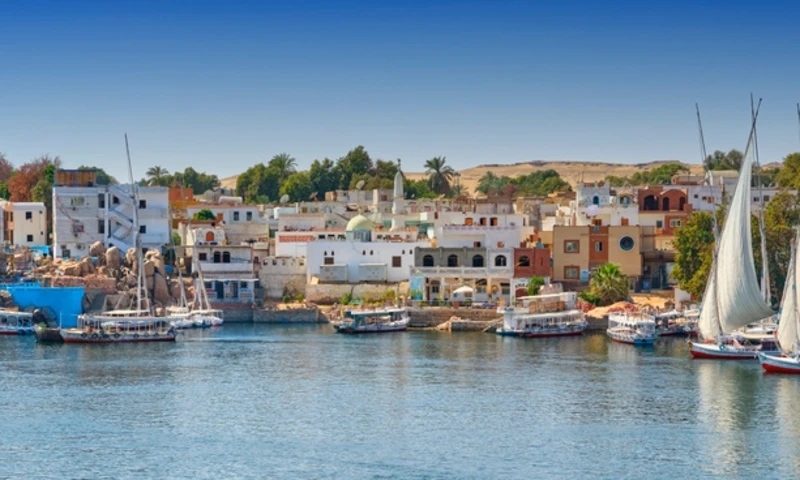
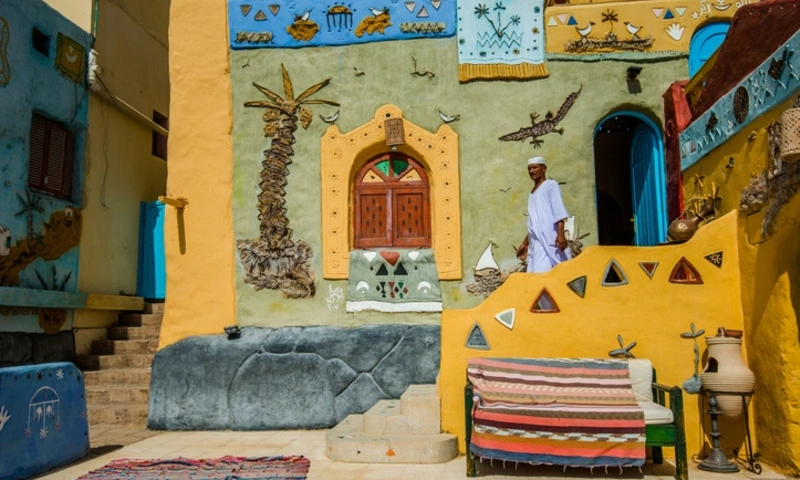
Nubian houses are among the village's most striking structures, low-slung with domed or vaulted ceilings to keep temperatures down in the desert heat, and brightly painted in a riot of colors and patterns that differ from house to house. Some have carved wooden doors, wall paintings, and even crocodiles in their courtyards, pets the Nubians believe are a good omen.
Winding your way through the narrow sand-bottomed alleys is the best way to take in the Nubian village, offering a perspective not available from a boat trip. Many families here will invite you into their home for a drink or two, or perhaps a more extended visit, though it is not a set tour.
Nubian Culture, Traditions, and Language
Nubian culture is largely centered around the language that is used by the locals – the Nubian language, which has survived to this day despite the prevalence of Arabic in the rest of Egypt. The Nubian culture also significantly focuses on music and dance, which are both integral parts of any celebration, and the call and response style of singing, as well as hand drumming.
The tradition of storytelling is an essential part of the Nubian culture due to this region’s history, which was previously poorly documented, with many legends and tales being passed from generation to generation. Therefore, when visiting the village, it is important to remember the cultural history of the Nubian people and understand their struggles rather than just admire the landscape.
Food and Crafts
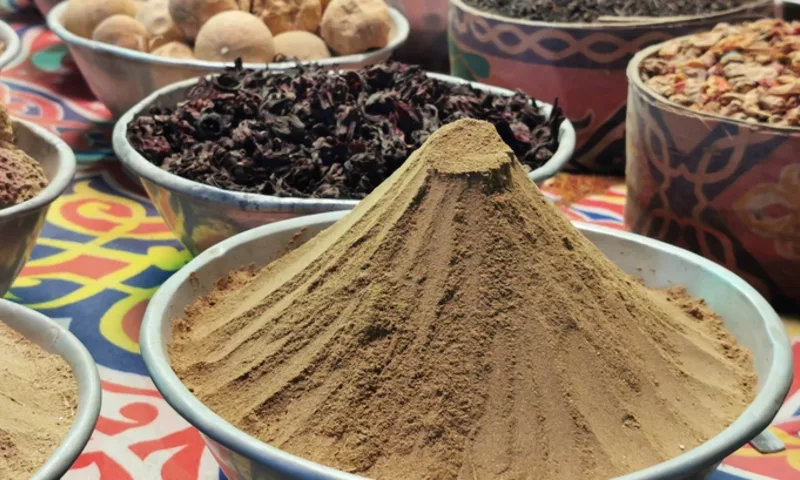
Nubian cuisine is based on local products that have been adapted to the hot climate; most dishes are made of a combination of grains, legumes, and fish from the Nile that are seasoned with special spices. In most cases, it is possible to explore local people and their homes or nearby village restaurants to taste authentic Nubian cuisine. Handicrafts, such as papyrus, basket weaving from grass, jewelry making, and embroidery, are produced by local villagers and can be purchased at small shops in the village. Purchasing such souvenirs directly from villagers is much better than buying them in Aswan.
Combining a Nubian Village Visit with Aswan's Other Sites
A tour of a Nubian Village fits perfectly with the other Aswan attractions, as most are a short drive away. Philae Temple, which is a brief motorboat ride from Aswan, is near enough that it can be combined with a Nubian Village tour in the same day for travelers who have the time. Our guide to Philae Temple has further information on the history and relocation of the temple for those considering this combination.
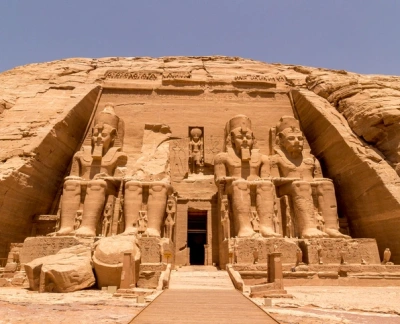
Some travelers with an additional day sometimes include Abu Simbel Temples in their itineraries, and our guide to the Abu Simbel Temples has additional details on what to expect on that longer journey, although it is usually reserved for a separate day due to the distance from Aswan.
Getting There and the Best Time to Visit
Reaching the Nubian Village involves a short motorboat crossing from Aswan's Corniche that can be arranged either independently or as part of a guided excursion, and the crossing itself takes only a matter of minutes based on departure point. Cooler months of the year, roughly November through March, lend themselves better to walking the village than do the peak of summer when daytime temperatures in Upper Egypt reach their peak.
For travelers arriving in Aswan as part of a larger river itinerary, Egypt Nile Cruises typically allot time in the city that can be spent adding on a Nubian Village excursion to the cruise's regularly scheduled temple visits.
How Much Time to Spend at the Nubian Village
Two to three hours should be enough to meander leisurely around the village, perhaps, stopping off for tea at someone's home and browsing the local crafts shops. Some travelers like to make a half-day of it, including a meal, while others with less time may combine a shorter tour of the village with a visit to Philae Temple on the same afternoon.
FAQs
1- How much time do you need for a Nubian Village visit?
Two to three hours would be perfect for a Nubian village tour, as it includes a walk and visit to the community, having tea, and shopping.
2- How do you get to the Nubian Village from Aswan?
A short motorboat ride from Aswan's Corniche will take you to Gharb Soheil, the most visited Nubian village.
3- What makes Nubian houses distinctive?
Nubian people build their houses low and with a dome or vaulted roof. Their houses have colorful wall paintings and drawings decorated in unique traditional patterns.
4- Can a Nubian Village visit be combined with Philae Temple?
Combined with a Philae Temple tour, as they are both only a short motorboat ride away from Aswan; however, make sure you have enough time in your schedule for this trip.
5- Is Nubian a different language from Arabic?
Nubian is actually a separate language that many people speak in this community, and it is still used today. It is used in addition to the Egyptian Arabic dialect.